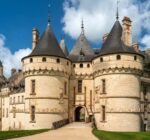


Stand on the rolling plains of Puglia in southern Italy and you’ll see it long before you reach it — a lone hilltop fortress, perfectly symmetrical, rising from the pale limestone landscape like a statement no one can fully translate. Castel del Monte is one of the most unusual buildings in Europe. And after 800 years, no one can agree on what it was actually for.
An emperor who played by different rules
Holy Roman Emperor Frederick II was not your average medieval ruler. He spoke six languages, kept a private menagerie of exotic animals, and corresponded with Islamic scholars at a time when most Christian kings were launching crusades against them. His contemporaries called him stupor mundi — the wonder of the world.
When he ordered the construction of Castel del Monte around 1240 AD, he wasn’t simply building a fortress. He was making a statement in stone.
The result was unlike anything else in Europe. An octagon, surrounded by eight octagonal towers at each corner. Eight rooms on each of the two floors. Even the staircases repeat the pattern. The number eight was no accident — in medieval numerology it sat between the four corners of the earth and the spiritual perfection of the heavens. Frederick knew exactly what he was doing.
You can read more about the spectacular fortresses Frederick’s successors left behind in our guide to Italy’s most spectacular castles — but none are quite like this one.
The riddle of what’s missing
Here is the detail that stops every historian cold. Castel del Monte has no well. No cistern. No water supply of any kind. It has no kitchen. No stables. No barracks. No evidence of a permanent garrison ever being stationed there.
For a medieval fortress, that is extraordinary. You cannot survive a siege without water. You cannot feed a garrison without a kitchen. You cannot shelter knights without stables. Every practical military requirement is simply absent.
So what was it? The theories have been debated for centuries. A hunting lodge, perhaps — though the elaborate interior decoration, including marble floors, carved stone arches, and what were once mosaic-tiled walls, suggests something far more ceremonial than a place to rest between hunts. An astronomical observatory? The castle’s proportions align with the sun and moon at specific points in the year, and Frederick was famously fascinated by astronomy. A philosophical monument? A place of initiation linked to Frederick’s documented interest in esoteric traditions?
Nobody knows. The mystery has never been solved.
The mathematics of obsession
Walk through the castle and the precision becomes almost overwhelming. The angles are exact to a degree unusual for the period. The proportions repeat with a consistency that required careful planning long before the first stone was laid.
The builders used three distinct types of stone — local limestone, reddish-brown breccia, and a pale grey marble — in arrangements that appear deliberately patterned. There are Roman-style latrines with plumbing more sophisticated than most structures of the 13th century. There are columns repurposed from older Roman buildings, integrated with evident intention.
Medieval Europe built many castles fast, out of military necessity, with practicality as the only brief. Castel del Monte was built slowly, with care, over years. This was not a general’s castle. It was a thinker’s castle.
UNESCO recognised as much in 1996 when they added it to the World Heritage List, noting its “outstanding value as a product of medieval culture, reflecting a physical expression of a complex intellectual and philosophical relationship between architecture and mathematics.”
Love exploring the world? Join thousands of travellers who get stories like this every week. Subscribe free →
Visiting Castel del Monte today
The castle sits about 60 kilometres west of Bari in the Apulia region, in a commune that has taken the fortress’s name as its own. It opens year-round, with longer hours in summer, and the entry fee is modest. The surrounding views across the Apulian plain reward the drive on their own.
Most visitors to Puglia focus on the coast or the Trulli houses of Alberobello, roughly 50 kilometres to the south-east. Those are worth your time — but Castel del Monte offers something those sites cannot. It asks a question and refuses to answer it.
The drive from Bari takes about an hour. From Alberobello, allow another 45 minutes. Some visitors pair the castle with Matera, the ancient cave city about 90 kilometres to the east, for one of the most striking day trips anywhere in southern Italy.
It is a very different experience from the well-documented fortresses of northern Italy. Our guide to Italy’s mountain fortresses and seaside strongholds is a useful companion read if you want to plan a wider Italian castle itinerary.
The castle that ended up in your pocket
There is one final detail worth knowing. When Italy joined the euro in 2002, the country needed an image for its 1 euro cent coin. The designers chose Castel del Monte.
Every Italian euro cent minted since then has carried the eight-towered octagon on its reverse. That is billions of coins in circulation across Europe, all bearing the image of a castle whose purpose has never been satisfactorily explained.
Frederick II built his perfect octagon in 1240. Centuries later, millions of people carry it in their pocket — and most couldn’t point to it on a map. That gap between ubiquity and obscurity feels entirely fitting for a place that has always refused easy answers.
FAQ: Castel del Monte
Where is Castel del Monte?
Castel del Monte is in the Apulia region of southern Italy, in the Andria province of Puglia. It sits on a hilltop roughly 60 kilometres west of Bari and 50 kilometres north-west of Alberobello. The nearest large town is Andria, about 17 kilometres away.
Why did Frederick II build Castel del Monte?
Nobody knows for certain — and that is part of what makes the castle so fascinating. The absence of a water supply, kitchen, or stables rules out a straightforward military or residential function. Historians have proposed a hunting lodge, an astronomical observatory, a ceremonial monument, and a philosophical statement in stone. Frederick II was one of the most intellectually ambitious rulers of the medieval world, and the castle reflects that complexity.
Is Castel del Monte worth visiting?
Absolutely. It is a UNESCO World Heritage Site, one of the best-preserved medieval structures in southern Italy, and one of the most architecturally unusual buildings anywhere in Europe. Entry is affordable, the setting is dramatic, and it combines well with a visit to Alberobello, Matera, or the Apulian coast.
Why is Castel del Monte shaped like an octagon?
The octagonal shape was almost certainly deliberate and symbolic. In medieval Christian numerology, eight was associated with resurrection and regeneration — above the four earthly elements and below the divine perfection of nine. Frederick II was known for his interest in mathematics, astronomy, and philosophy, and the repetition of eight throughout the castle (eight sides, eight towers, eight rooms per floor) suggests a deeply intentional design.
For Those Who Dream In Miles
Every week, get travel stories that take you somewhere extraordinary — castles, coastlines, hidden villages, and the roads less travelled.
Love more? Join 64,000 Ireland lovers → · Join 43,000 Scotland lovers →
Free forever · One email per week · Unsubscribe anytime
Some castles were built to hold kingdoms. Others to intimidate enemies or impress allies. Castel del Monte was built, it seems, to ask a question. Eight centuries on, we are still trying to answer it — which is perhaps exactly what Frederick had in mind.