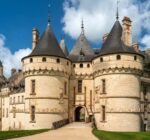


Italy is home to more than 24,000 castles. No other country in Europe comes close. They rise from volcanic islands, cling to mountain ridges, dominate city skylines, and hide in valleys few tourists ever reach. Yet most visitors spend their Italian holidays moving between churches and piazzas, completely unaware of the extraordinary fortresses surrounding them.
That changes today. Here are six Italian castles that deserve a place on your bucket list — from Rome’s ancient imperial fortress to a mysterious octagonal tower in Puglia that has baffled historians for eight centuries.
Castel Sant’Angelo, Rome — the castle that became a papal refuge
Few buildings in the world have lived as many lives as Castel Sant’Angelo. Built in AD 123 as a mausoleum for Emperor Hadrian, it was later converted into a military fortress, then a papal residence, and eventually a prison for some of history’s most famous captives — including, briefly, the astronomer Galileo.
A secret elevated passageway called the Passetto di Borgo once connected the castle directly to the Vatican, allowing popes to flee to safety during sieges. Today you can walk that same corridor. The views from the terrace over the River Tiber are extraordinary, particularly at dusk when the bridge below is lit by ornate lanterns. Allow at least two hours to explore all six floors.
Rocca Calascio — Europe’s highest fortress
Perched at 1,460 metres above sea level in the Gran Sasso mountains of Abruzzo, Rocca Calascio is one of the most dramatic sights in all of Italy. Built in the 10th century and expanded over the following four centuries, this mountaintop fortress was abandoned after a devastating earthquake in 1703 and left to nature for over two hundred years.
Its haunting, crumbling silhouette drew filmmakers — it featured in the 1985 fantasy film Ladyhawke and has appeared in several Italian productions since. The hike up from the village of Calascio takes around 30 minutes and rewards you with views stretching across the Apennines that simply cannot be replicated anywhere else in Europe.
Love exploring the world? Join thousands of travellers who get stories like this every week. Subscribe free →
Castello di Fénis — a fairy-tale in the Aosta Valley
Drive north from Turin towards the Alps and the Aosta Valley reveals itself like a living museum of medieval fortification. Dozens of castles dot the valley floor, but Castello di Fénis is the crown jewel. Built by the powerful Challant family in the 14th century, its concentric walls, round towers, and frescoed courtyard look lifted straight from a storybook.
Unlike many Italian castles stripped bare over the centuries, Fénis retains much of its original character — including vivid Gothic frescoes depicting Saint George and a beautiful sundial carved into the courtyard wall. Entry costs just a few euros, and the castle is open for most of the year. A short drive connects it to several excellent Alpine restaurants.
Castel del Monte — Puglia’s great mystery
In the flat plains of Puglia, far from any town, a perfectly octagonal tower rises from a low hill. Castel del Monte was built by Holy Roman Emperor Frederick II around 1240, and despite centuries of study, nobody fully understands why. There is no water source, no stabling, no obvious defensive purpose. Its octagonal plan — repeated in its eight towers and eight internal rooms — seems to carry symbolic weight, perhaps astronomical, perhaps mathematical, perhaps simply the vision of a brilliant and eccentric ruler.
UNESCO listed it in 1996, describing it as “a unique masterpiece of medieval architecture.” It appears on the Italian one-cent coin. Plan a visit in late afternoon, when the pale limestone walls glow gold in the Pugliese light. If you enjoy Europe’s more mysterious medieval fortresses, Eastern Europe offers equally compelling surprises just a short flight away.
Aragonese Castle, Ischia — fortress on a volcanic rock
Off the coast of Naples, the island of Ischia holds one of southern Italy’s most dramatic fortresses. The Castello Aragonese sits on a small volcanic islet connected to the main island by a 220-metre stone bridge. The site has been occupied almost continuously since the ancient Greeks first settled the rock in the 5th century BC.
At its medieval peak, this tiny islet held a cathedral, three churches, a convent, and a community of around 1,800 people — all within the castle’s protective walls. Today you can spend several hours exploring its layered history. A highlight, for those with a strong stomach, is the convent cemetery where the decomposing bodies of deceased nuns were once seated in chairs as a memento mori. Sobering, strange, and absolutely unforgettable.
Castello Sforzesco, Milan — the Renaissance fortress at the city’s heart
Milan’s Castello Sforzesco is easy to underestimate. Set in the centre of one of Europe’s most modern cities, surrounded by tram lines and designer boutiques, it can look almost out of place. But this fortress has been central to Milanese power for over six centuries. Built in the 14th century and extensively rebuilt by Francesco Sforza in 1450, it once housed Leonardo da Vinci as a court artist and engineer.
Today the castle contains seven museums, including one that holds Michelangelo’s final unfinished sculpture — the Rondanini Pietà, carved by the artist until just days before his death. Entry to the castle’s courtyards is free. The museums charge a modest fee. If all this castle-hopping has you wondering where to spend the night inside one, our guide to the best castle hotel stays in Europe covers everything from Irish manor houses to French châteaux. Spain’s Parador network also offers extraordinary castle overnight stays at surprisingly reasonable prices.
Frequently asked questions about Italian castles
What is the most famous castle in Italy?
Castel Sant’Angelo in Rome is arguably the most famous, thanks to its extraordinary 1,900-year history and its dramatic position beside the Tiber. Castello Sforzesco in Milan and Castel del Monte in Puglia are both UNESCO-listed and equally celebrated among history enthusiasts and architects.
Can you visit Rocca Calascio?
Yes — Rocca Calascio is open to visitors and has no entry fee. The nearest village is Calascio in the Abruzzo region, roughly two hours east of Rome. The walk up from the village car park takes approximately 30 minutes on a well-marked footpath. The surrounding Gran Sasso National Park offers excellent hiking if you want to extend your visit.
How many castles does Italy have?
Italy has over 24,000 castles, towers, and fortified structures — more than any other country in Europe. This extraordinary number reflects Italy’s fragmented medieval history, when hundreds of city-states, dukedoms, and noble families each needed their own fortifications. Many are privately owned, some are ruins, but hundreds are open to visitors year-round.
Which Italian castle is the most unusual?
Castel del Monte in Puglia is the most architecturally unusual — its perfectly octagonal design has no parallel in European castle-building. Rocca Calascio, at nearly 1,500 metres altitude, is the most dramatically situated. And the Aragonese Castle on Ischia, perched on its own volcanic rock just off the coast of Naples, is arguably the most atmospheric.
For Those Who Dream In Miles
Every week, get travel stories that take you somewhere extraordinary — castles, coastlines, hidden villages, and the roads less travelled.
Love more? Join 64,000 Ireland lovers → · Join 43,000 Scotland lovers →
Free forever · One email per week · Unsubscribe anytime
Italy’s castles are not relics. They are living monuments to ambition, ingenuity, and the very human need to protect what matters most. Whether you scale a mountain to reach a crumbling Apennine fortress or stand inside a perfectly preserved Renaissance courtyard in Milan, you are standing inside a history that most of the world has yet to find. Go find it.