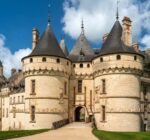


Spain has more castles than any other country in Europe. Over 2,500 of them dot the landscape — from the whitewashed towns of Andalusia to the wind-swept plains of Castile. Many are famous worldwide. Others sit quietly on hilltops, barely visited, still magnificent.
Here are the ones worth seeking out.
The Alhambra, Granada — possibly Europe’s most beautiful building
Nothing prepares you for the Alhambra. You can read about it, study photographs, watch documentaries — and still arrive breathless.
Built by the Moorish Nasrid dynasty in the 13th and 14th centuries, the Alhambra is less a castle and more a civilisation made of stone. The Court of the Lions, with its perfectly balanced fountain and 124 marble columns, is one of the finest rooms ever created. The carved stucco ceilings look like stalactites made of cream.
Crowds are real. Book your timed ticket weeks in advance. Go early, stay late.
Love exploring the world? Join thousands of travellers who get stories like this every week. Subscribe free →
Alcázar of Segovia — the castle that launched a fairy tale
Rising from a rocky promontory above Segovia, this castle looks like something from a dream. The sharp blue-grey towers, the dramatic drop on three sides — it’s widely suggested that Walt Disney used the Alcázar as inspiration for Cinderella’s castle.
True or not, the legend fits. Inside, you’ll find suits of armour, a throne room with a spectacular artesonado ceiling, and views across the Castilian plateau that stretch further than you’d think possible.
It’s a two-hour train journey from Madrid. Go on a weekday to avoid the worst of the crowds.
Castillo de Loarre — fortress above the clouds
Most travellers drive past without stopping. That’s their loss.
Castillo de Loarre sits at 1,070 metres above sea level in Aragon, one of the best-preserved Romanesque castles in all of Europe. The climb to the entrance is steep. The view from the top — across the Hoya de Huesca plain below — is extraordinary.
It was built in the 11th century as a base for the Reconquista campaign against Moorish rule. Peter Jackson used it as a filming location. Once you see it, you’ll understand why.
Peñíscola — the city-castle by the sea
Jutting into the Mediterranean on a rocky promontory in Valencia, Peñíscola looks like it was built to be seen from the sea. It was. The Knights Templar began construction in the late 13th century, and Pope Benedict XIII later made it his home during the Western Schism.
The castle sits above a whitewashed old town, its narrow streets winding down to the water’s edge. Game of Thrones fans may recognise it — it stood in for the city of Meereen in series five and six.
It’s one of the most atmospheric places in Spain. And most British visitors have never heard of it.
Bellver Castle, Mallorca — the circular one
Most castles are square or rectangular. Bellver is neither. Built in the early 14th century for King James II of Majorca, it’s one of the only circular Gothic castles in the world.
The moat is circular too. So is the inner courtyard. It shouldn’t work, but it does — beautifully. Perched on a pine-forested hill above Palma, it offers sweeping views across the bay and houses the city’s history museum.
Entry is inexpensive and crowds are manageable. It’s the sort of castle you stumble upon and don’t forget.
Alcázar of Seville — where Columbus got the green light
Technically a royal palace rather than a castle, the Alcázar of Seville still makes the list. Still in use by the Spanish royal family, it’s one of the oldest royal residences in Europe still in official use. Its gardens alone are worth the journey.
The upper gardens are quieter than the main rooms. Go in the afternoon when the light changes and the orange trees fill the air.
This is where Isabella I and Ferdinand II received Christopher Columbus on his return from the Americas. History hangs in every wall here.
For those who love castles with a ghost story attached, our guide to Europe’s most haunted castles is well worth a read. And if you’re thinking about actually sleeping in a castle, the best castle hotels in Europe includes Spain’s remarkable Parador network. For dramatic clifftop fortresses beyond Spain’s borders, Eastern Europe’s hidden castles are in a league of their own.
Frequently asked questions
What is the most famous castle in Spain?
The Alhambra in Granada is widely considered Spain’s most famous and most-visited historic monument, receiving nearly three million visitors a year. Tickets must be booked well in advance — often weeks ahead during peak season.
Can you stay in a Spanish castle?
Yes. Spain’s Parador network runs several historic castles converted into hotels. Parador de Sigüenza, Parador de Cardona, and Parador de Oropesa are among the most atmospheric. Prices are often surprisingly reasonable for what you get — a genuine medieval fortress, with breakfast included.
What makes Spanish castles different from English or French ones?
Spain’s history of Moorish occupation for nearly 800 years created a unique architectural tradition. Many Spanish castles incorporate Islamic design elements — intricate geometric tilework, carved plasterwork, and courtyard water features — that simply don’t exist in northern European fortresses. It’s this blend of cultures that makes Spanish castles so distinctive.
For Those Who Dream In Miles
Every week, get travel stories that take you somewhere extraordinary — castles, coastlines, hidden villages, and the roads less travelled.
Love more? Join 64,000 Ireland lovers → · Join 43,000 Scotland lovers →
Free forever · One email per week · Unsubscribe anytime
Spain rewards those who look beyond the obvious. The Alhambra is famous for good reason. But the clifftop at Loarre, the circular towers of Bellver, and the salt-stung battlements of Peñíscola — these are the places that stay with you long after the photographs fade.