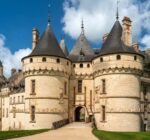


Everyone knows Italy for the Colosseum, the Duomo, and the canals of Venice. But Italy has another side — one built not for beauty, but for survival. The country’s castles span 2,000 years and half a dozen civilisations: Roman emperors, Byzantine generals, Norman warlords, Aragonese kings, and Renaissance princes all left their mark in stone. The best part? Most travellers walk straight past them.
Castel Sant’Angelo, Rome — the fortress that outlived an empire
Built as a mausoleum for Emperor Hadrian in 123 AD, Castel Sant’Angelo was never meant to be a fortress. But when the Western Roman Empire began to crumble, the Romans walled it in and turned it into a military stronghold. Over the following 1,400 years, it became a papal prison, a royal residence, and a place of last resort — complete with a secret passageway connecting it to St Peter’s Basilica so popes could flee during sieges.
Today you can walk that passageway, see the cells where prisoners once watched Rome from tiny windows, and climb to the roof terrace for one of the finest views in the city. This is a castle that survived the Sack of Rome in 1527, served as a refuge for five different popes, and still stands on the banks of the Tiber as one of the most layered historical buildings in Europe.
Castello Sforzesco, Milan — the Renaissance hiding in plain sight
Milan doesn’t feel like a castle city. But right in the centre, behind the wide boulevards and designer boutiques, sits one of the most impressive fortresses in northern Italy. Castello Sforzesco was the seat of the Sforza dynasty — Milan’s ruling family during the height of the Renaissance — and the evidence is everywhere.
Leonardo da Vinci worked here. Michelangelo completed his final sculpture, the Rondanini Pietà, within these walls. Today the castle houses nine separate museums, yet it remains one of Milan’s most undervisited landmarks. Skip the queues and spend a quiet morning wandering these courtyards instead — you’ll have more history to yourself than you might expect.
Love exploring the world? Join thousands of travellers who get stories like this every week. Subscribe free →
The Aragonese Castle, Ischia — a fortress born from the sea
Rising from a volcanic rock just off the coast of Naples, the Aragonese Castle is one of Italy’s most dramatic sights. Connected to the main island by a narrow stone bridge, it sits on its own rocky outcrop as if it grew there naturally. The original Greek settlement dates back to 474 BC. What you see today was largely built by the Aragonese in 1441.
At its peak, nearly 2,000 people lived here — nuns, monks, nobles, and ordinary islanders all crowded onto a single sea-battered rock. The castle has been a lighthouse, a prison, and a monastery. Now it’s open to visitors who make the crossing, and the views across the Bay of Naples are genuinely breathtaking. Island fortresses don’t come more spectacular than this.
Rocca Calascio, Abruzzo — the ruin that inspired Hollywood
At 1,460 metres above sea level in the Gran Sasso mountains, Rocca Calascio is one of the highest fortifications in Italy — and one of the most hauntingly beautiful. Built in the 10th century and badly damaged by an earthquake in 1703, it has never been fully restored. The ruins are entirely the point.
Hollywood noticed. Ladyhawke (1985) and The Name of the Rose were both filmed here. But you don’t need a film connection to appreciate what you’re looking at: a medieval fortress slowly returning to the mountain, ringed by hilltop villages that time seems to have forgotten. If you’re searching for castles most travellers never find, Rocca Calascio belongs at the top of your list.
Castel del Monte, Puglia — the eight-sided mystery no one can explain
In the heel of Italy’s boot, rising from a treeless hilltop in Puglia, stands a castle unlike any other in Europe. Castel del Monte has eight sides. Eight octagonal towers. Eight rooms on each floor. Everything about it is eight — and no one fully understands why.
Emperor Frederick II commissioned it in 1240 and left no explanation behind. Historians have filled the gap with theories: a hunting lodge, an astronomical observatory, a monument to sacred mathematics. The castle has no moat, no stables, no drawbridge. It was never designed for defence. What it was designed for remains one of medieval Europe’s most compelling unsolved questions. For more on the hidden secrets inside great castles, you’ll find plenty of company here.
Frequently asked questions about Italy’s castles
What is the most famous castle in Italy?
Castel Sant’Angelo in Rome is arguably the most famous, given its 1,900-year history as a mausoleum, military fortress, papal residence, and prison. Castello Sforzesco in Milan runs a close second for its Renaissance heritage and central location.
Can you visit Italian castles as a tourist?
Yes — most of the castles featured here are open to the public. Castel Sant’Angelo, Castello Sforzesco, the Aragonese Castle on Ischia, and Castel del Monte all offer regular visitor access. Rocca Calascio is freely accessible year-round and requires no ticket. Opening times and entry fees vary by season, so check ahead before visiting.
Why does Italy have so many castles?
Italy was divided into dozens of competing city-states, kingdoms, and papal territories for most of its history — each needing fortifications to defend its power. Add Roman military infrastructure, Norman invasions in the south, and the wealth of Renaissance princes, and you have a country where castle-building was almost continuous for 1,500 years. Italy is estimated to have more than 40,000 castles, towers, and fortified structures in total.
For Those Who Dream In Miles
Every week, get travel stories that take you somewhere extraordinary — castles, coastlines, hidden villages, and the roads less travelled.
Love more? Join 64,000 Ireland lovers → · Join 43,000 Scotland lovers →
Free forever · One email per week · Unsubscribe anytime
Italy is a country where history doesn’t sit behind glass — it’s underfoot, overhead, and all around you. These castles aren’t footnotes to a trip. They’re the story itself.