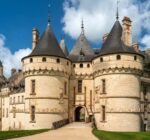


Some castles were built for power. Others were built for beauty. The ones worth travelling furthest to see were built for both — and they chose the most inhospitable, dramatic, impossible spots on the map to do it.
Perched on crumbling sea cliffs. Rising from tidal islands. Commanding straits where warships once fought and fell. These are the castles that look like they came from a dream — and they’re all real.
Dunnottar Castle, Scotland — the fortress that refused to fall
Nothing prepares you for Dunnottar. You follow a coastal path in Aberdeenshire and then, suddenly, the ground drops away — and there it is, a ruined fortress clinging to a 50-metre sea stack, surrounded on three sides by the churning North Sea.
This was the castle that held out against Cromwell’s forces for eight months in 1651, all while smuggling Scotland’s crown jewels to safety. Enemies laid siege from the cliff top. Supply ships crept in from the sea below. The castle didn’t fall.
Today you descend a steep, narrow path to reach the gatehouse. The ruins are extensive — a chapel, a drawing room, barracks. In the right light, it looks like the edge of the world. If you love Scotland’s most spectacular castles, Dunnottar belongs at the very top of your list.
Dunluce Castle, Northern Ireland — where the kitchen fell into the sea
Dunluce isn’t just dramatic in appearance. It’s dramatic in history. This clifftop castle on the Antrim coast has a story that belongs in a novel: in 1639, during a dinner party, the kitchen fell off the cliff into the sea below. Several servants died.
The castle belonged to the MacDonnell clan, who used sea caves beneath the cliffs to smuggle in supplies. The whole structure teeters above a sixty-metre drop to the Atlantic. There was once a drawbridge across the chasm to the mainland — which tells you exactly how seriously the owners took their security.
Dunluce is one of Ireland’s most photographed sights. It sits among Ireland’s most spectacular coastal scenery, and nothing else quite looks like it.
Love exploring the world? Join thousands of travellers who get stories like this every week. Subscribe free →
Mont Saint-Michel, France — the island the tide protects
Strictly speaking, Mont Saint-Michel is an abbey built on a fortified tidal island. But you’d be hard-pressed to find anything in Europe more defended by nature. The tides here — among the fastest-rising in the world — once cut the island off completely, drowning the causeway and making any military assault nearly suicidal.
Medieval pilgrims risked their lives to cross the sands on foot. Armies tried and largely failed. Inside the island walls, an entire medieval community lived and worked. They fished, farmed, and worshipped. The abbey at the top dates to the 8th century.
Today a modern causeway connects it to the mainland. The tides still come in fast and high. And in the golden evening light, the Mont still glows like something from another age.
Castello Aragonese, Ischia, Italy — fortress on a volcanic island
Off the coast of Naples, the volcanic island of Ischia rises from the sea. And from its own rocky islet, connected by a thin stone bridge, rises the Castello Aragonese.
Alfonso of Aragon built the current structure in 1441, on a site fortified since ancient Greek times. At its height, more than 1,300 families lived inside the castle walls — complete with churches, convents, a cathedral, and a hospital. They sheltered there from pirates, rival armies, and the island’s own volcanic tremors.
The views from the ramparts across the Bay of Naples are extraordinary. On a clear day, Vesuvius watches from the mainland.
Eilean Donan Castle, Scotland — the most photographed castle in Britain
This one earns its reputation. Eilean Donan sits at the confluence of three sea lochs in the Scottish Highlands, its reflection perfectly mirrored in the still water on calm mornings. The approach road gives you the postcard view that has appeared on countless travel magazines — and it still takes your breath away.
The original castle dates to the 13th century. It was blown up by a Royal Navy bombardment in 1719. The current structure was painstakingly rebuilt between 1911 and 1932. It is one of the most visited attractions in Scotland, and entirely worth the journey.
Bamburgh Castle, England — the king of the Northumberland coast
Few castles command their landscape as completely as Bamburgh. It sits on a great basalt crag above the Northumberland coast, visible for miles in every direction, with a wide beach stretching below and the Farne Islands dark on the horizon.
This is one of the oldest continually occupied strongholds in England — a royal seat of the ancient kings of Northumbria. It withstood Viking raids. During the Wars of the Roses, it became the first English castle to fall to artillery fire.
The interior is well-preserved and worth exploring. But it’s the view from the ramparts, out across the grey North Sea, that stays with you longest. Alongside England’s most spectacular castles, Bamburgh stands in a category of its own.
Where is the most dramatic clifftop castle in the world?
Dunnottar Castle in Aberdeenshire, Scotland, is widely considered one of the most dramatically placed castles anywhere. Perched on a sea stack above the North Sea, accessible only by a steep coastal path, it looks exactly like something from a legend — because it is.
Can you visit Mont Saint-Michel?
Yes, and it’s absolutely worth it. Mont Saint-Michel in Normandy is open year-round. You can walk the causeway, explore the medieval village inside the walls, and tour the ancient abbey. The tides are spectacular — always check times before walking the sands around the island.
Which coastal castle should I visit in Ireland?
Dunluce Castle on the Antrim coast is the obvious choice — dramatic, accessible, and unlike anywhere else in Europe. In the south, Charles Fort in Kinsale is superb, commanding the harbour from a star-shaped fortification above the water. Both are unforgettable.
For Those Who Dream In Miles
Every week, get travel stories that take you somewhere extraordinary — castles, coastlines, hidden villages, and the roads less travelled.
Love more? Join 64,000 Ireland lovers → · Join 43,000 Scotland lovers →
Free forever · One email per week · Unsubscribe anytime
Some of the most powerful places on earth were built precisely because they were impossible. The cliff was too steep, the island too exposed, the waves too dangerous. The people who built these fortresses looked at all of that and decided: here.
They weren’t wrong.