

Most people assume fairy-tale castles are pure invention. Towering turrets, drawbridges, moonlit battlements — surely nobody built anything so impractical just for beauty? They did. The world’s most beloved fairy tales were inspired by real castles that still stand today. And you can walk through every one of them.
The castle that became Sleeping Beauty
No building on Earth has shaped our idea of a fairy-tale castle more than Neuschwanstein. King Ludwig II of Bavaria built it in the 1880s, perched above a gorge in the Bavarian Alps like something from another world. Ludwig never meant it as a fortress. He built it as a romantic retreat, inspired by Wagnerian opera and medieval legend.
Walt Disney visited Neuschwanstein in 1935 and never forgot it. Two decades later, it became the direct model for Sleeping Beauty’s Castle at Disneyland. Today, over 1.4 million people visit every year, making it one of the most photographed buildings in Europe.
The interior is equally extraordinary. Every room tells a story — Norse legends, medieval romances, the tales of Lohengrin and Tannhäuser. Ludwig spent almost every night of his life here before drowning in mysterious circumstances in 1886, aged 40. He never finished it. That incompleteness is part of what makes it haunting.
Neuschwanstein sits alongside some of Germany’s other extraordinary castles. Discover six more German castles that will take your breath away.
The castle that inspired Cinderella
In central Spain, the Alcázar de Segovia rises from a rocky promontory like the prow of a stone ship. Its turrets are capped in dark slate — a colour combination so unusual, so distinctly storybook, it seemed impossible when Disney’s artists first encountered it.
Many historians believe the Alcázar directly inspired Cinderella’s Castle at Walt Disney World. The silhouette is unmistakable: elongated towers, a Germanic roofline, the sheer drama of a fortress on a cliff. Disney’s imagineers have never confirmed their sources, but the resemblance is too close to ignore.
The Alcázar began as a Moorish fortress and was rebuilt by the Christian kings of Castile in the 14th century. It served as the palace where Isabella I was proclaimed Queen of Castile in 1474 — effectively the beginning of modern Spain. The throne room, the chapel, and the soaring keep are among the most ornate medieval interiors on the Iberian Peninsula.
The Loire Valley’s original Sleeping Beauty
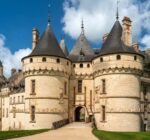
If Neuschwanstein inspired Disney, the Château d’Ussé inspired the author. Charles Perrault, who first published Sleeping Beauty in 1697, is said to have gazed across the Loire Valley at Ussé’s white towers and spires and seen his enchanted palace. It is easy to see why.
Ussé sits at the edge of the Chinon forest in the Indre-et-Loire. Its Renaissance towers are white limestone, its roofline a carnival of dormers and chimneys, its formal gardens designed by André Le Nôtre — the same man who created the gardens at Versailles. From the right angle, it looks as though it floats above the trees.
The Loire Valley is extraordinary for castle density. Explore France’s most breathtaking chateaux here.
Love exploring the world? Join thousands of travellers who get stories like this every week. Subscribe free →
The Gothic masterpiece of Pierrefonds
Not all fairy-tale castles are ancient. The Château de Pierrefonds in northern France was a ruined 14th-century fortress until Napoleon III ordered it rebuilt in the 1850s. The architect was Eugène Viollet-le-Duc — the man who also restored Notre-Dame de Paris. He did not restore it faithfully. He reimagined it entirely.
The result is what many historians call the world’s most theatrical medieval revival castle. Enormous towers, stone gargoyles, a soaring great hall, painted chapels — Pierrefonds is what the Middle Ages looked like through romantic Victorian eyes. Fantasy writers and filmmakers have used it endlessly. The BBC filmed Merlin here. The influence of Pierrefonds on modern fairy-tale imagery is larger than most people realise.
The castle that time forgot
In the Moselle Valley of western Germany, Burg Eltz clings to a rock surrounded on three sides by the Eltz stream. It has never been destroyed, never burned, never conquered. The same family has owned it for over 850 years.
What makes Burg Eltz remarkable is its organic growth. Different branches of the Eltz family added towers and wings across centuries without any master plan. The result is a castle that looks as though it dreamed itself into existence — eight residential towers of different heights, crammed onto a single rock, with battlements jutting at every angle. It appears on German banknotes. It is, by most measures, the most beautiful castle in Central Europe.
Where fairy tales come from
Eastern Europe has its own fairy-tale fortress tradition. Bojnice Castle in Slovakia, Bran Castle in Romania, and Orava Castle perched on its rocky cliff all fed into the central European imagination that produced Grimm’s fairy tales. Discover the fairy-tale castles of Eastern Europe here.
The pattern is consistent. Wherever castles were built on dramatic terrain — cliff edges, mountain spurs, river bends — local storytellers invented tales to match. The castle came first. The story followed. And the story, eventually, travelled around the world.
Which castle inspired Disney’s Sleeping Beauty Castle?
Neuschwanstein Castle in Bavaria, Germany, is the acknowledged inspiration for Sleeping Beauty’s Castle at Disneyland, California. Walt Disney reportedly based the design on Ludwig II’s fantasy palace after visiting Bavaria in the 1930s. The resemblance in the roofline, towers, and mountain setting is unmistakable.
Can you visit Neuschwanstein Castle today?
Yes — Neuschwanstein is open year-round and is one of Germany’s most popular tourist sites. Access is by guided tour only. You can reach it from Munich by train in under two hours, then take a bus or walk up from the village of Hohenschwangau. Pre-booking tickets is essential in summer and at weekends.
Which castle inspired the fairy tale Sleeping Beauty?
Charles Perrault, who published the original Sleeping Beauty story in 1697, is widely believed to have been inspired by the Château d’Ussé in the Loire Valley, France. The castle’s white towers and forest setting match the story’s enchanted palace almost perfectly. The Château de Pierrefonds in northern France has also been cited as an influence on later illustrated versions of the tale.
For Those Who Dream In Miles
Every week, get travel stories that take you somewhere extraordinary — castles, coastlines, hidden villages, and the roads less travelled.
Love more? Join 64,000 Ireland lovers → · Join 43,000 Scotland lovers →
Free forever · One email per week · Unsubscribe anytime
Fairy tales are not pure invention. They are maps — maps to real places, built by real people who wanted to live inside a dream. The castles are still there, still standing, still surprising the travellers who find them. You just have to go.