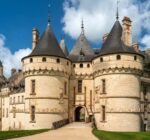


Most people think of France when they picture a fairytale castle. Or perhaps Germany. Perhaps Scotland. But the most jaw-dropping fortresses in Europe are hiding somewhere else entirely — in the countries most travellers rush past on the way to somewhere else.
Eastern Europe is castle country like nowhere else on Earth. From medieval giants perched on volcanic rock to Gothic fortresses that look lifted straight from a storybook, these are the castles that will change how you see the continent.
Bojnice Castle, Slovakia: the one that started the fairy tales
You could be forgiven for thinking Bojnice was designed by Walt Disney. The turrets, the moat, the creamy stone rising above ancient trees — it looks almost too perfect to be real. But Bojnice Castle has stood in central Slovakia since at least the 12th century, and it earns every bit of its reputation as one of the most beautiful castles in Europe.
The Romantic style you see today came from Count Ján Pálffy, who spent decades in the late 19th century transforming a medieval fortress into his vision of a perfect castle. He was inspired by French chateaux, and the result is something entirely its own.
Bojnice hosts an annual International Festival of Ghosts and Ghouls each spring — and the castle’s underground catacombs and secret chambers give the event genuine atmosphere. Even on an ordinary day, the place feels enchanted.
Predjama Castle, Slovenia: built inside a cliff
Halfway between Ljubljana and Trieste, a small road winds up into limestone country and suddenly reveals something extraordinary. Predjama Castle doesn’t just sit on a cliff. It grows out of one — built directly into the mouth of a vast cave, 123 metres up a sheer rock face.
The castle dates to the 12th century, but it’s the story of Erazem of Predjama that everyone comes to hear. A 15th-century knight who defied the Habsburg emperor, he reportedly used a secret tunnel through the cave system to source supplies and taunt his besiegers — for over a year. He was eventually killed not in battle but by a cannonball while using the castle’s privy.
It’s one of the most dramatic structures in Europe, and barely anyone outside Slovenia knows it exists.
Corvin Castle, Romania: where the ravens circle
Romania has more medieval castles than most people realise. Bran Castle gets the tourist hordes, but the real story of Dracula’s castle is more complicated than the legend suggests. Romania’s true Gothic masterpiece is Corvin Castle in Hunedoara — a 15th-century fortress so dramatic it looks assembled from nightmares and ambition in equal measure.
Towers of different heights crowd together above a ravine. Gothic arcades, a drawbridge, stone reliefs of ravens — the castle was built by John Hunyadi, one of the great military commanders of medieval Europe, as both a defensive stronghold and a statement of power. Standing beneath it, you believe him entirely.
Malbork Castle, Poland: the world’s largest castle by area
The statistics alone are staggering. Malbork Castle in northern Poland covers 21 hectares — making it the largest castle in the world by land area. Built by the Teutonic Knights in the 13th century, it served as the seat of their Grand Masters and housed hundreds of knights at its peak.
What makes Malbork extraordinary isn’t just the scale. It’s the quality of restoration. Heavily damaged in the Second World War, the castle has been painstakingly rebuilt to near-original condition. It now holds UNESCO World Heritage status, and walking through its three interconnected fortresses feels like stepping inside an entire medieval city.
Love exploring the world? Join thousands of travellers who get stories like this every week. Subscribe free →
Karlštejn Castle, Czech Republic: guardian of the crown jewels
Thirty kilometres southwest of Prague, Karlštejn rises from forested hills like something out of a medieval manuscript. Charles IV, Holy Roman Emperor and King of Bohemia, built it in 1348 for one purpose: to safeguard the Bohemian crown jewels and his collection of holy relics.
The Great Tower’s Chapel of the Holy Cross was so precious that women were once forbidden from entering. Today it can only be visited by guided tour, and only a limited number of visitors are admitted each year. The polished semi-precious stones lining the chapel walls — jasper, amethyst, chalcedony — make it unlike anything else in Central Europe.
Spiš Castle, Slovakia: the giant that time forgot
Slovakia earns a second mention because it deserves one. Spiš Castle in the east of the country is among the largest castle complexes in Central Europe — a UNESCO World Heritage Site spreading across a volcanic rock above the Spiš lowlands.
The ruins stretch for nearly four hectares, and walking through them gives a genuine sense of the scale at which medieval builders worked when they wanted to project power. The castle was never taken in battle — its occupants simply abandoned it after a fire in 1780. What remains feels like an ancient city rather than a single fortress, and the views over the Tatra Mountains in the distance are some of the finest in all of Central Europe.
What are the most famous castles in Eastern Europe?
Eastern Europe has a remarkable range of medieval fortresses. Predjama Castle in Slovenia is famous for being built into a cliff face. Malbork Castle in Poland is the world’s largest castle by land area. Corvin Castle in Romania is widely considered one of the finest examples of Gothic architecture in the region. Bojnice in Slovakia is celebrated as one of the most photographed castles in Central Europe, and Karlštejn near Prague draws visitors from across the world.
Is Predjama Castle worth visiting?
Yes — Predjama Castle is one of the most extraordinary structures in Europe. Built into the mouth of a cave in a sheer cliff face, it’s unlike any other castle on the continent. The castle sits about nine kilometres from Postojna Cave, making it easy to combine both in a single day. The drive through the Slovenian karst landscape is spectacular in its own right.
Which Eastern European country has the most castles to visit?
Slovakia and the Czech Republic are both exceptionally castle-rich for their size — Slovakia alone has over 100 castles and castle ruins. Romania is also notable, with dozens of medieval fortresses in the Carpathian region. Poland’s network of Teutonic Knight castles along former border regions offers another remarkable concentration. All three countries reward travellers who venture beyond the most famous sites.
For Those Who Dream In Miles
Every week, get travel stories that take you somewhere extraordinary — castles, coastlines, hidden villages, and the roads less travelled.
Love more? Join 64,000 Ireland lovers → · Join 43,000 Scotland lovers →
Free forever · One email per week · Unsubscribe anytime
Eastern Europe’s castles don’t need the crowds. They don’t need the reputation. They just need you to show up — and when you do, you’ll wonder why it took you so long to look this way.