

Most visitors to Germany put Neuschwanstein on their list and call it done. That’s understandable — it’s one of the most photographed buildings on Earth. But Germany has more than 25,000 castles, palaces, and fortress ruins. Most of them see a fraction of the crowds. Several of them are more spectacular than the famous one.
Here are six that deserve a place on your itinerary.
Burg Eltz — the castle photographers can’t stop taking
Tucked into a wooded valley near the Moselle River, Burg Eltz looks like someone built it to disprove the idea that fairy tales aren’t real. The castle has been owned by the same family for 33 generations. It has never been destroyed. Three separate family branches still live in different wings today.
What makes Eltz extraordinary isn’t just its appearance — it’s the setting. Walk the approach trail through the forest and the castle appears suddenly, perched on a rock spur with trees pressing in on three sides. No photograph prepares you for that moment. You turn a corner on the path and there it is, entirely medieval, entirely perfect.
Visit on a weekday morning in spring or autumn. The light through the valley in early hours is extraordinary, and the crowds are thin.
Cochem Castle — the Moselle’s most dramatic silhouette
Cochem Castle sits high above the town of Cochem, its towers visible for miles along the Moselle River. The original structure dates to the 11th century. The current building is largely a 19th-century reconstruction — which, if anything, makes it more dramatic. It was built to impress, and it succeeds completely.
The views from the top are the real reason to climb. On a clear day, the river bends through the valley below like a silver ribbon, with vineyards stacked on every slope. Come in late September when the vines are turning gold and the castle glows amber in the afternoon light.
Heidelberg Castle — romantic ruins above the river
Heidelberg is Germany’s most visited castle, and rightly so. Built in the 14th century and partially destroyed by lightning and French troops in the 17th, it exists in a state of magnificent ruin that no architect could have planned. The broken red sandstone walls catch the light differently at every hour of the day.
The castle sits above the old town, reached by funicular. Allow time to walk the terraced gardens and look out over the Neckar River. At dusk, the illuminated ruins reflected in the water below are something you will not easily forget.
Love exploring the world? Join thousands of travellers who get stories like this every week. Subscribe free →
Hohenzollern Castle — where German emperors come home
Perched on a solitary hill in Baden-Württemberg, Hohenzollern Castle was the ancestral seat of the Hohenzollern dynasty — the family that produced the German Kaisers. The current structure is the third castle built on this site, completed in 1867. It looks like a fortress dreamed up in a particularly vivid novel.
Inside, you’ll find Prussian military relics, royal porcelain, and the crown of Kaiser Wilhelm II. Outside, the castle appears to float above a sea of dark forest. On foggy mornings, it genuinely looks like it’s rising from the clouds. It’s two hours from Stuttgart and worth every minute of the drive.
Wartburg — where history turned
Most German castles are about architecture or scenery. Wartburg, in Thuringia, is about something bigger. Martin Luther hid here in 1521 after being declared an outlaw by the Holy Roman Emperor. In ten months, he translated the New Testament into German — arguably one of the most consequential acts in European history.
The castle itself is 900 years old, with a Romanesque great hall that’s been called one of the finest in Germany. UNESCO gave it World Heritage status in 1999. But what stays with you is the small study where Luther worked — a wooden desk, a view of the forest, and the weight of what happened here.
Schwerin Castle — Germany’s forgotten fairy tale
Schwerin is the capital of Mecklenburg-Vorpommern, a region most tourists skip entirely. Their loss. Schwerin Castle sits on an island in a lake, connected to the old town by a causeway. It has 365 rooms — one for every day of the year, according to local legend — and its towers and turrets reflect perfectly in the still water.
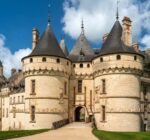
This is Germany’s answer to Chambord. It’s less visited than almost any castle on this list, which makes it one of the best. Early morning is extraordinary: mist on the water, no crowds, and a castle that looks like it belongs in a dream.
Planning a broader German castle trip? Read our guide to visiting Neuschwanstein Castle and our look at whether Nymphenburg Palace is worth visiting. For the best castle stays across Europe, see our guide to castle hotels.
Frequently asked questions
What is the most beautiful castle in Germany besides Neuschwanstein?
Burg Eltz consistently tops the list for photographers and travellers who’ve visited both. Its forested valley setting and 33-generation family ownership make it unlike anywhere else in Germany. Hohenzollern is a close second for sheer dramatic impact, especially on a misty morning when it appears to float above the clouds.
Which German castle is easiest to visit from Frankfurt?
Heidelberg Castle is about an hour from Frankfurt by direct train and is one of the most accessible major castles in Germany. Burg Eltz is roughly two hours by train followed by a short forest walk — more effort, but many travellers say it’s the highlight of their entire trip to Germany.
Are these German castles suitable for families with children?
Cochem and Heidelberg both have excellent visitor facilities and are family-friendly. Wartburg has fascinating exhibits that bring medieval history to life for older children. Burg Eltz requires a 20-minute forest walk from the car park, which most children actually love. All six are well worth a visit with family in tow.
For Those Who Dream In Miles
Every week, get travel stories that take you somewhere extraordinary — castles, coastlines, hidden villages, and the roads less travelled.
Love more? Join 64,000 Ireland lovers → · Join 43,000 Scotland lovers →
Free forever · One email per week · Unsubscribe anytime
Germany’s castle landscape is one of Europe’s most underexplored travel stories. Beyond the famous turrets of Neuschwanstein, dozens of fortresses, ruins, and palaces are waiting in forests, above rivers, and on lone hilltops. Pack the camera, take the slow road, and give these places the time they deserve.