

In the summer of 1575, one man threw the most expensive party in Tudor history. For nineteen days, he entertained a queen with fireworks, staged battles, mythological pageants and feasts that stretched past midnight. His name was Robert Dudley, and the castle he transformed for her visit still stands in Warwickshire — half-ruined, utterly magnificent, and charged with something close to heartbreak.
The man who loved the Queen
Robert Dudley was Elizabeth I’s oldest friend and, by most accounts, the great love of her life. They had known each other since childhood. When she became queen in 1558, she made him Master of the Horse — a position that kept him constantly at her side.
For decades, the two were inseparable. Courtiers gossiped. Ambassadors wrote home in disbelief. Was the queen really in love with her favourite? Was she actually going to marry him?
She never did. But Dudley never quite gave up. In 1575, he decided to make his case one final time — through stone, water, spectacle, and sheer extravagance.
Building for a queen
Kenilworth Castle had been a royal stronghold since the 12th century. Henry II built the massive keep that still dominates the skyline. John of Gaunt added the great hall in the 14th century. But it was Dudley — who had been granted the castle by Elizabeth herself — who transformed it into something worthy of a queen.
In the years before her visit, he constructed a new range of apartments with enormous windows designed to flood the rooms with light. He created a formal pleasure garden with a fountain and an aviary. He raised the water level in the great lake surrounding the castle walls and stocked it with fish. He wanted Kenilworth to be perfect.
The total cost of the preparations and entertainments has been estimated at around £60,000. In today’s terms, that runs into the tens of millions. For a queen who might never say yes.
Love exploring the world? Join thousands of travellers who get stories like this every week. Subscribe free →
The nineteen days that changed Kenilworth
Elizabeth arrived on 9 July 1575. She was greeted by a figure playing the Lady of the Lake, who materialised on a floating island in the middle of the water and delivered a speech of welcome in verse.
That was just the beginning.
Over the following weeks, Dudley staged tournaments, spectacular fireworks, bear-baiting contests, hunting parties, theatrical performances and elaborate allegories drawn from classical mythology. Each day brought something new. Each evening ended with feasts and dancing. Contemporary observers described the fireworks as shooting across the sky “so thick that it appeared as if it was daylight.”
Elizabeth extended her stay again and again. But at the end of those nineteen days, she rode away. She never came back.
The long decline
Dudley died in 1588, just weeks after Elizabeth watched him lead England’s forces against the Spanish Armada. She was said to have wept. She kept the last letter he ever wrote to her in a box by her bed until her own death fifteen years later.
Kenilworth passed through several hands over the following decades. During the English Civil War, Parliamentary forces deliberately demolished large sections of the castle to prevent its use as a Royalist stronghold. The great keep was partially blown up. The lake was drained. The apartments Dudley had built for Elizabeth were left to the mercy of Warwickshire weather.
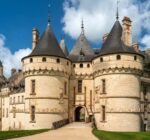
What remained was magnificent in its ruin. The massive red sandstone walls. The ghost of the great hall. The Gatehouse that Dudley had built especially for her visit, still almost intact.
Visiting Kenilworth Castle today
Kenilworth Castle is managed by English Heritage, and what they’ve done with it is quietly extraordinary. Reconstructed sections of the Elizabethan garden have been planted out exactly as they would have appeared in 1575 — the same knot-garden patterns, the same fountain, the same sense of designed wonder. The Gatehouse where Dudley waited to greet the queen has been restored and is now available as holiday accommodation. You can actually sleep in the rooms he built for her.
Inside the castle, clear interpretation panels bring the Tudor entertainments back to life. Come on a quiet weekday morning, when the light is low and the ruins are almost to yourself, and it is difficult not to feel the weight of all that hope.
Kenilworth pairs well with a visit to Warwick Castle, just eight miles away. For more on what makes England’s fortresses unforgettable, see our guide to England’s most spectacular castles. Or head north for Bamburgh Castle on the Northumberland coast.
Frequently asked questions
Where is Kenilworth Castle?
Kenilworth Castle is in the town of Kenilworth in Warwickshire, central England — roughly eight miles from Warwick and fewer than twenty miles from Birmingham. It is easily reached by car or on foot from Kenilworth town centre.
Can you visit Kenilworth Castle?
Yes. English Heritage manages the site and it is open year-round, with seasonal opening times. The reconstructed Elizabethan Garden is one of the highlights, along with the near-intact Gatehouse. Check the English Heritage website for current admission prices and opening hours before you visit.
Why is Kenilworth Castle in ruins?
Parliamentary forces deliberately damaged large sections of the castle during the English Civil War in the 1640s — a process known as “slighting” — to prevent it being used as a Royalist military stronghold. The great lake was drained at the same time, and the castle was never restored.
Did Robert Dudley and Elizabeth I have a romantic relationship?
Almost certainly something was there — Elizabeth called him her “Sweet Robin” and kept portraits of him throughout her life. Whether the relationship was ever physical remains one of the great unanswered questions of Tudor history. What is not in doubt is the depth of their attachment, or the grief she showed when he died.
For Those Who Dream In Miles
Every week, get travel stories that take you somewhere extraordinary — castles, coastlines, hidden villages, and the roads less travelled.
Love more? Join 64,000 Ireland lovers → · Join 43,000 Scotland lovers →
Free forever · One email per week · Unsubscribe anytime
What Robert Dudley built at Kenilworth was, in the end, a love letter written in sandstone and water. She read it. She enjoyed every extraordinary day of it. And then she rode home. Five centuries later, the ruins are still there — still beautiful, still charged with something unresolved.