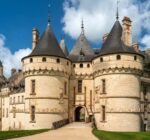


Most castles were built out of necessity — for defence, for power, for survival. Schloss Lichtenstein was built for something quite different. It was built because someone read a book and fell in love with an idea.
Perched on a cliff edge in Germany’s Swabian Jura, this castle looks like it was lifted straight from a fairy tale. But its origins are stranger and more romantic than most ancient fortresses — because the current building didn’t exist until 1842.
A castle born from fiction
In 1826, a young German writer named Wilhelm Hauff published a romantic novel called Lichtenstein. Set during a violent 15th-century conflict in the Duchy of Württemberg, the story made the ruined hilltop fortress — the original medieval Lichtenstein — its dramatic backdrop.
The novel became a sensation. And it caught the attention of Duke Wilhelm of Urach, who owned the crumbling ruins on that very cliff. The duke was so captivated by Hauff’s vision that he decided to rebuild the castle — not as a practical home, but as a monument to the romantic ideal of medieval Germany.
By 1842, the new Lichtenstein stood complete: a neo-Gothic fantasy of towers, turrets, and a proper drawbridge, designed by architect Carl Alexander Heideloff to look as though it had always been there. It worked almost too well.
The original fortress — and its violent end
The cliff had hosted a fortress long before the duke’s romantic project. The first Lichtenstein Castle was built in the 12th century, serving as a stronghold of the Württemberg counts. In 1381, during the War of the Imperial Cities — a brutal conflict between the Holy Roman Emperor and a coalition of free cities — the castle was completely razed.
A second, lesser structure rose from the ruins over the following centuries, but it fell into neglect and was demolished around 1800. The cliff sat empty and forgotten until Hauff’s novel arrived — and, with it, Duke Wilhelm’s determination to bring the vision back to life.
The ruins of the original medieval Lichtenstein still survive today, just a few hundred metres from the current castle. Visiting both gives you a quietly powerful sense of how many centuries this ridge has seen.
Love exploring the world? Join thousands of travellers who get stories like this every week. Subscribe free →
What’s inside Schloss Lichtenstein today
Remarkably, Schloss Lichtenstein remains in private hands. The ducal house of Urach still owns the castle, and guided tours are the only way inside. The interior doesn’t disappoint: a vaulted chapel, an armoury stocked with genuine medieval weapons, painted halls, and period furniture create the atmosphere the duke always intended.
What strikes most visitors, though, is the position. The castle sits at around 817 metres above sea level, jutting out over the Echaz valley below. From the tower, the Swabian Alb stretches in every direction — forested ridges, quiet villages, and the faint glint of rivers far below.
A small hunting lodge beside the castle still serves as the ducal family’s private residence during visits. Knowing the family still comes here adds something intangible to the experience — this isn’t a heritage site running on fumes. It’s still somebody’s beloved place.
Germany’s most underrated castle region
Lichtenstein sits in the Swabian Jura — a limestone plateau that most tourists completely ignore in favour of the Black Forest or the Bavarian Alps. That’s their loss. The Swabian Alb is scattered with castles, cave systems, and hilltop viewpoints that reward anyone willing to explore beyond the obvious.
Germany has extraordinary castles most tourists never find — but Lichtenstein is the one that tends to stop people cold. It’s about 80 kilometres south of Stuttgart, easily reached by car, and far less crowded than the castles of Bavaria. The village of Honau at the foot of the cliff has a car park, and a forest footpath winds up to the castle gate in about 20 minutes.
Allow a full hour or more once you’re inside. The guided tours are thorough, and the views from the outer ramparts deserve unhurried attention.
The castle that fiction made real
There’s something quietly remarkable about Lichtenstein’s existence. Most castles were shaped by war, politics, or sheer survival. This one was shaped by a story. Duke Wilhelm read a novel, fell under its spell, and spent a fortune bringing an imagined world back into being.
You might argue that makes it less authentic than a fortress built in the 12th century. But stand on the drawbridge and look down at the valley disappearing below your feet, and that argument fades quickly. If you’re interested in the tradition of real castles inspiring famous stories, Lichtenstein offers the flip side: a story that inspired a real castle.
The feeling of standing here is completely real — and that’s what matters.
Is Schloss Lichtenstein open to visitors?
Yes. Schloss Lichtenstein is open to the public for guided tours. It is privately owned by the ducal house of Urach, so tours run to a fixed schedule — check the official website before visiting. The castle is closed in winter and on certain weekdays during the shoulder season.
How do you get to Lichtenstein Castle in Germany?
The castle is located near the village of Honau, in the district of Reutlingen, Baden-Württemberg. By car, it’s roughly 80 kilometres south of Stuttgart — about an hour’s drive. The closest train station is Reutlingen; from there, take a regional bus towards Honau. A forest footpath leads up from the village car park to the castle in around 20 minutes.
What makes Lichtenstein Castle different from Neuschwanstein?
Both are 19th-century castles built as romantic visions of the medieval past — but Lichtenstein predates Neuschwanstein by almost 30 years and attracts a fraction of the crowds. Where Neuschwanstein was built for King Ludwig II as a private retreat and theatrical statement, Lichtenstein was built specifically to honour a piece of literature and the history of a particular cliff. It’s smaller, less famous, and — for many visitors — more genuinely affecting.
For Those Who Dream In Miles
Every week, get travel stories that take you somewhere extraordinary — castles, coastlines, hidden villages, and the roads less travelled.
Love more? Join 64,000 Ireland lovers → · Join 43,000 Scotland lovers →
Free forever · One email per week · Unsubscribe anytime
Lichtenstein has been waiting for you at the edge of that cliff for nearly two centuries. Most people will never find it. That’s rather the point.