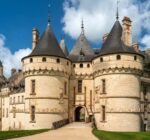


Some castles are best experienced broken. When the roofs fall and the towers crack, something unexpected happens — the history becomes visible. You can stand inside a wall that was built to keep out armies, and feel the wind that has blown through it for five hundred years.
Europe is scattered with these places. Ruins that outlasted the kingdoms that built them. Here are some of the most extraordinary.
Dunnottar Castle, Scotland
Nothing quite prepares you for Dunnottar. The ruined fortress sits on a sheer promontory jutting into the North Sea, accessible only by a steep path that drops and climbs again before you reach the gatehouse. On grey days, it looks like something from a fever dream.
The castle’s history is as dramatic as its setting. Scotland’s crown jewels were smuggled out in 1652 during a Cromwellian siege. Over a hundred Covenanting prisoners were held in the dungeon — a space barely large enough for a fraction of them — and many died there. Walking through the roofless great hall, you feel the weight of all of it.
Dunnottar is a two-hour drive from Edinburgh and well worth the journey. Go in the morning before the tour coaches arrive.
Corfe Castle, England
Corfe Castle stands on a natural gap in the Purbeck Hills in Dorset, and it stands there in pieces. The Parliamentary forces who captured it in 1646 spent considerable effort blowing it apart, and yet it refused to fully collapse. The gatehouse leans at an impossible angle. Towers tilt but hold.
Before its destruction, Corfe was one of the most formidable royal strongholds in England. King Edward the Martyr was murdered here in 978. Lady Bankes famously held the castle against a two-year Parliamentary siege with a handful of servants before it finally fell through betrayal from within.
The village of Corfe Castle, which grew up around the fortress, is equally beautiful. A visit takes a full afternoon if you do it properly.
Love exploring the world? Join thousands of travellers who get stories like this every week. Subscribe free →
Raglan Castle, Wales
Raglan is the ruin that surprises people most. They expect something modest, something Welsh and wind-beaten. Instead they find a late-medieval showpiece — a palace-castle built for display as much as defence — with a magnificent hexagonal keep rising from its own moat.
Like Corfe, Raglan was deliberately slighted after the Civil War. The Parliamentarians spent three weeks undermining the great tower before it cracked and fell. What remains is still breathtaking: the gatehouse, the great hall, the fountain court. Welsh castles have their own particular beauty — you can read more at The castles most travellers never find.
Chateau Gaillard, Normandy
Richard the Lionheart built Chateau Gaillard in less than two years — an extraordinary feat for the 1190s — and considered it impregnable. Philip II of France proved him wrong in 1204, capturing it after a siege in which the French soldiers reportedly entered through the latrine shaft.
The ruins stand on a chalk spur above a bend of the Seine near Les Andelys. The setting is glorious: river valley, farmland, the white cliffs of the promontory. The walls still show the concentric ring design that Richard imported from Crusader castle-building in the Holy Land. It is one of the great pieces of military architecture in Europe, even in pieces.
Spis Castle, Slovakia
Spis Castle is one of the largest castle ruins in Central Europe — a sprawling complex on a volcanic hill that covers over 4 hectares. It looks, from a distance, like an entire city on top of a cliff.
The castle dates from the 12th century and passed through Hungarian, Polish and Habsburg hands before fire gutted it in 1780. UNESCO listed it as a World Heritage Site in 1993. The views across the Tatra mountains are extraordinary.
Rocca Calascio, Italy
At 1,460 metres above sea level, Rocca Calascio is the highest castle in the Italian Apennines. The views stretch across the Gran Sasso plateau in every direction. The hamlet below was abandoned after an earthquake in 1703. Only the castle and a small church survive.
The castle appeared in the 1985 film Ladyhawke and in The Name of the Rose. On screen and in person, it has the quality of a place that was never quite of this world. Italian mountain fortresses have their own character — for more, see Italy’s most spectacular castles.
FAQ: visiting castle ruins in Europe
Are castle ruins safe to visit?
Most major castle ruins in Europe are managed heritage sites with maintained paths and safety barriers. Some remote ruins have no formal management — use common sense around unstable masonry and never climb structures not designed for it.
What is the best time of year to visit castle ruins?
Spring and autumn offer the best combination of light, temperature and smaller crowds. Winter ruins can be extraordinarily atmospheric — Dunnottar in January, with a grey sea below and no other visitors, is an experience few people have.
Why were so many medieval castles destroyed?
Many were deliberately slighted — systematically damaged — by victorious forces after sieges to prevent them being used again. The English Civil War (1642 to 1651) accounts for many of Britain’s finest ruins. Others were simply abandoned when warfare changed and fell apart over centuries.
Which country has the most castle ruins in Europe?
Wales has the highest density of castles per square mile. Germany’s Rhine and Moselle valleys contain hundreds of ruined fortresses. France, Scotland, Ireland and Slovakia all have significant concentrations worth seeking out. Europe’s most haunted castles covers some of the most storied locations.
For Those Who Dream In Miles
Every week, get travel stories that take you somewhere extraordinary — castles, coastlines, hidden villages, and the roads less travelled.
Love more? Join 64,000 Ireland lovers – Join 43,000 Scotland lovers
Free forever – One email per week – Unsubscribe anytime
The best castle ruins do not ask you to imagine what they were. They are already extraordinary as they stand — in pieces, open to the sky, telling their stories in stone. Find one. Go early. Take your time.