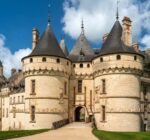


You cross a wooden drawbridge. The water stretches around you in every direction. And then you pass through a stone gateway that hasn’t changed in 700 years.
This is Rocca Scaligera — the Scaligero Castle — rising from the narrow peninsula of Sirmione at the southern tip of Lake Garda. It’s one of the most perfectly preserved medieval fortresses in Italy. And almost nobody outside the country knows its name.
A castle built for war on the most beautiful lake in Italy
Lake Garda is Italy’s largest lake. Its waters are clear and blue, framed by mountains to the north and soft hills to the south. Poets have written about it for centuries. The Romans called it Lacus Benacus.
Sirmione sits on a thin finger of land that pokes out from the lake’s southern shore. It’s barely 100 metres wide in places. In the 13th century, whoever controlled that peninsula controlled the lake’s southern access — and therefore the trade routes running through the region.
The della Scala family, lords of Verona, understood this immediately. Around 1250, they began building Rocca Scaligera at the very tip of the entrance to Sirmione. Three towers. Thick walls. A harbour inside the castle walls where their warships could shelter. And water on three sides — the lake itself serving as the moat.
No one was getting in unless the family allowed it.
The family Shakespeare knew
The della Scala — also called the Scaligeri — ruled Verona and much of northern Italy from 1262 to 1387. They were powerful, ambitious, and occasionally ruthless. They built churches, palaces, and fortresses across the region. And they put their name on this castle that still stands on Lake Garda today.
You may know them by another name.
When Shakespeare wrote Romeo and Juliet, he set his story in Verona during the height of the Scaligeri’s rule. The “Prince Escalus” who presides over the feud between the Montagues and Capulets? That name comes directly from “Scala” — the Scaligeri family name. The rival houses themselves — the Montecchi and the Cappelletti — were real factions who genuinely clashed in medieval Verona.
Shakespeare didn’t invent the drama. He found it already written in the history of this region.
The family who commissioned this castle on the lake were the same people whose world gave us one of the greatest love stories ever told.
Love exploring the world? Join thousands of travellers who get stories like this every week. Subscribe free →
Inside Rocca Scaligera — what you’ll find today
The castle is remarkably well preserved. You still cross the original drawbridge to enter. The gatehouse still stands. And once inside, you can climb the towers — all the way to the top — for views across the lake that stretch to the Alps.
The interior harbour is one of the castle’s most unusual features. The Scaligeri kept their fleet here, sheltered from the open water. Today it’s quiet — just stone walls, still water, and the occasional duck — but you can feel how strategic this position once was.
The battlements are Ghibelline merlons — the distinctive swallowtail crenellations you see on Verona’s Castelvecchio. A deliberate political statement in stone. Walk them slowly. The views are worth it.
For more of Italy’s most extraordinary fortresses, see our guide to Italy’s most spectacular castles — five fortresses that will genuinely surprise you.
Planning your visit to Sirmione
Sirmione is easy to reach. From Verona, it’s about 35 minutes by car. From Milan, allow around 90 minutes. There’s also a regular ferry service across the lake from Desenzano del Garda, which drops you right in the heart of the old town.
The castle is open most of the year, with reduced hours in winter. Entry costs around €8 for adults — one of the best-value tickets you’ll buy in Italy. Go early in the morning or late afternoon to avoid the summer crowds.
While you’re in Sirmione, walk to the far end of the peninsula. The Grotte di Catullo — the ruins of one of the largest Roman villas in northern Italy — sit right at the tip, with the lake on three sides and mountains in the distance. The Roman poet Catullus called this his favourite place in the world. It’s not hard to understand why.
If you love dramatic water castles, you’ll also want to read about the world’s most dramatic clifftop and island castles — and compare this Lake Garda gem with the best.
Beyond the castle — Sirmione itself
Sirmione is a town of cobbled lanes, geranium-draped balconies, and thermal springs that bubble up through the lake bed. The Aquaria Thermal Spa uses naturally warm sulphurous water from those same springs — a strange and wonderful experience after a morning spent climbing castle towers.
The old town is pedestrianised. Narrow streets lead past restaurants, wine bars, and gelaterias. Sit outside with a glass of Lugana — the local white wine made from vineyards just south of the lake — and watch the light change over the water.
It’s the kind of afternoon that makes you wonder why you ever left.
Frequently asked questions
Who built Scaligero Castle at Sirmione?
Rocca Scaligera was built by the della Scala family — the Scaligeri — who ruled Verona and much of northern Italy from the mid-13th century. Construction began around 1250. The family controlled this strategic position on Lake Garda for over a century, using it as both a military fortress and a base for their lake fleet.
What is the connection between the Scaligeri and Romeo and Juliet?
Shakespeare’s character Prince Escalus — the ruler of Verona who tries to stop the feud — takes his name from the Scaligeri family (della Scala). The Montecchi and Cappelletti, the real families behind Shakespeare’s Montagues and Capulets, were genuine rival factions in medieval Verona during the Scaligeri’s rule. The castle at Sirmione was built at the height of this turbulent era.
Is Scaligero Castle worth visiting?
Yes — it’s one of the most visually striking and historically significant medieval castles in Italy, and it’s often overlooked by travellers who focus on Venice or Florence. The combination of the castle, the Roman ruins at Grotte di Catullo, the thermal spa, and the beauty of Lake Garda makes Sirmione one of the most rewarding day trips in northern Italy. Entry is inexpensive and the tower views alone justify the visit.
How do you get to Sirmione?
By car from Verona takes around 35 minutes. From Milan, allow about 90 minutes. You can also take a train to Desenzano del Garda and then a short bus or taxi to Sirmione. In summer, ferries cross the lake from Desenzano and Peschiera del Garda. Note that private cars are not permitted beyond the castle gate — the town is pedestrianised.
For Those Who Dream In Miles
Every week, get travel stories that take you somewhere extraordinary — castles, coastlines, hidden villages, and the roads less travelled.
Love more? Join 64,000 Ireland lovers → · Join 43,000 Scotland lovers →
Free forever · One email per week · Unsubscribe anytime
Rocca Scaligera won’t be on most people’s lists. It doesn’t have the fame of Venice or the crowds of the Colosseum. But it rises from Lake Garda exactly as it did 700 years ago — drawbridge, towers, and all. That’s a rare thing. Go before everyone else finds it.