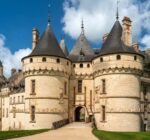


Most travellers have heard of Neuschwanstein or the Tower of London. Far fewer have stood on the ramparts of Kronborg — Shakespeare’s Elsinore — watching grey Baltic waves roll in across the Øresund strait. Scandinavia has been quietly hiding some of Europe’s most dramatic medieval fortresses, and it’s time they got the attention they deserve.
From the fairy-tale towers of Denmark to the ice-locked strongholds of Finland, these six castles will make you rethink where your next journey should take you.
Kronborg Castle, Denmark — where Hamlet walked the battlements
Built in the 1420s and rebuilt in grand Renaissance style after a devastating fire in 1629, Kronborg commands the narrowest point of the Øresund strait between Denmark and Sweden. For centuries it was one of the most strategically important fortresses in Europe — every ship passing through paid a toll here or faced its cannons.
Shakespeare never visited Kronborg, but he chose it as the setting for Hamlet nonetheless. The play is set in “Elsinore” — the old English name for the town of Helsingør where the castle stands. Each summer, theatre companies from across the world perform Hamlet in the castle’s courtyard, meaning you can stand in the very spot where fictional princes have agonised for four centuries.
Don’t miss the casemates — vast underground corridors where the legendary warrior Holger Danske is said to sleep, ready to wake and defend Denmark in her darkest hour. The statue is there, waiting in the dark. It’s genuinely spine-tingling.
Frederiksborg Castle, Denmark — a Renaissance palace on a lake
Just 35 kilometres north of Copenhagen, Frederiksborg Castle sits on three small islands in a lake in the middle of Hillerød. It’s so extravagantly beautiful it looks almost impossible — copper spires and Dutch Renaissance towers reflected perfectly in still water below.
Built by King Christian IV in the early 17th century, Frederiksborg now houses the Museum of National History. Its Great Hall is one of the finest interiors in Scandinavia — gilded ceilings, walls hung with portraits of Danish kings spanning seven centuries. The baroque garden behind the castle was restored to its original 17th-century design in the 1990s, completing one of Europe’s most remarkable historic ensembles.
Love exploring the world? Join thousands of travellers who get stories like this every week. Subscribe free →
Gripsholm Castle, Sweden — the most romantic fortress in the north
Rising from a promontory on Lake Mälaren in the small town of Mariefred, Gripsholm Castle has been in Swedish royal hands since 1537. Its distinctive round towers and warm brick walls make it one of the most photographed castles in Sweden — and rightly so.
Inside, the castle houses Sweden’s State Portrait Collection, an astonishing gallery spanning five centuries of history. But the real magic is the setting. Take the vintage steam train from Läggesta to Mariefred, arrive at this fortress shimmering in the lake, and you’ll understand why Swedes hold Gripsholm in such affection. If you’re wondering where else to stay after a castle visit, our guide to the best castle hotels in Europe has plenty of ideas.
Kalmar Castle, Sweden — the key to the north
For centuries, Kalmar Castle on Sweden’s east coast was the most important military fortress in all of Scandinavia. The Union of Kalmar — which united Denmark, Norway and Sweden under a single crown — was signed here in 1397. The document that changed the map of northern Europe was inked within these walls.
Today it’s one of Scandinavia’s best-preserved Renaissance castles. The King’s Chamber, the Queen’s Chamber, and the vast Great Hall are all open to visitors, with beautifully restored interiors that transport you straight into the 16th century. The castle is built right on the water’s edge — giving it extraordinary drama in every direction.
Akershus Fortress, Oslo — a medieval giant above the fjord
Built in the late 13th century and expanded across the following centuries, Akershus Fortress sits on a rocky promontory above Oslofjord. Its medieval walls offer sweeping views across the water, and the walk up from the harbour is one of the finest short strolls in the whole of Oslo.
Akershus has had a complicated history — besieged, expanded, converted from medieval castle to Renaissance palace, and later used as a Nazi headquarters during the Second World War. Today it functions as an active Norwegian military base, but much of the fortress is open to the public. The Royal Mausoleum, where several Norwegian monarchs are buried, can be visited on guided tours. Scotland has similarly layered fortress history — our piece on Scotland’s most spectacular castles explores six that carry that same weight of centuries.
Turku Castle, Finland — the oldest stone fortress in the Nordic countries
Founded around 1280, Turku Castle is the oldest stone castle in Finland and one of the oldest in all of Scandinavia. Built at the mouth of the Aura River as a simple island fortress, it grew over three centuries into a vast fortified palace with a history as turbulent as any in Europe.
The castle today houses a rich historical museum where you can walk through reconstructed medieval interiors — a great hall, a prison, and the chambers of Duke John of Finland, who was imprisoned here by his own brother before eventually becoming King of Sweden. Two hours from Helsinki, Turku rewards the journey with a fortress that feels genuinely untouched by the crowds that descend on better-known European castles.
Frequently asked questions about Scandinavian castles
Which Scandinavian castle is most worth visiting?
Kronborg Castle in Helsingør, Denmark, is arguably the most iconic — it’s a UNESCO World Heritage Site and the real-world Elsinore from Shakespeare’s Hamlet. It’s easily reached from Copenhagen in under an hour by train. Frederiksborg is the most visually spectacular, while Akershus in Oslo offers the most dramatic setting above the fjord.
Is Kronborg Castle really connected to Hamlet?
Yes — though Shakespeare himself never visited Denmark. He based the setting of Hamlet on Kronborg (calling it “Elsinore”), the name used by English sailors who knew the castle well as they passed through the Øresund strait. The castle’s dramatic clifftop position, its underground casemates, and its history of power and intrigue all fit the play’s atmosphere perfectly.
Can you visit Scandinavian castles year-round?
Most Scandinavian castles are open year-round, though opening hours are often reduced in winter. Kronborg, Frederiksborg, and Akershus Fortress are all accessible outside summer, and visiting in the off-season means far fewer crowds. Turku Castle in Finland is open year-round. Gripsholm has more limited winter hours, so it’s worth checking ahead before you travel.
How do Scandinavian castles compare to other European castles?
Scandinavian castles are generally less crowded than their counterparts in France, Germany, or England — and often better preserved. They tend to have a distinctly northern character: austere exteriors, dramatic waterside settings, and interiors that tell stories of Viking Age politics and Renaissance intrigue. If you enjoy Eastern European castle discoveries, you’ll find Scandinavian fortresses equally rewarding and even less visited.
For Those Who Dream In Miles
Every week, get travel stories that take you somewhere extraordinary — castles, coastlines, hidden villages, and the roads less travelled.
Love more? Join 64,000 Ireland lovers → · Join 43,000 Scotland lovers →
Free forever · One email per week · Unsubscribe anytime
Every one of these fortresses has something the better-known European castles often lack: space. You can walk Kronborg’s ramparts without jostling for position. You can stand in Kalmar’s Great Hall without a tour group at your heels. Scandinavia rewards travellers who look north — and these six castles are among the finest reasons to do exactly that.