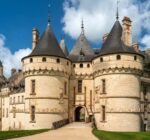


High in the foothills of the Aragonese Pyrenees, a castle sits on a limestone ridge so dramatically placed it looks like something a director invented. Ridley Scott didn’t invent it. He just pointed a camera at it. The Castillo de Loarre has been standing since 1070. Hollywood arrived roughly 935 years later.
Most travellers who visit Spain head for the Alhambra, the Alcázar, or the cities. Loarre sits quietly in the Aragonese countryside, receiving a fraction of the visitors it deserves. That’s part of what makes it extraordinary.
Built before the First Crusade
King Sancho Ramírez of Aragon began construction around 1070. This was before Pope Urban II called the First Crusade in 1095, before the Domesday Book recorded England’s landowners, before most of Europe’s great cathedrals broke ground. Loarre is not just old by castle standards — it is old by almost any standard.
Sancho Ramírez built it as a military base on the frontier between Christian Aragon and Moorish-held territory to the south. The site was strategic: perched on a spur of rock at nearly 1,100 metres above sea level, with sweeping views across the Ebro valley. Any approaching army would be visible for miles. Any attacker had to climb steep ground under fire the whole way up.
The castle grew in stages over the following century. It gained towers, a royal residence, and a Romanesque chapel dedicated to Saint Peter. What makes Loarre remarkable is how much of all that has survived. The outer walls still stand. The chapel still has its original carved apse. The keep still lords over the valley below.
Why Ridley Scott chose this place
When Scott began location scouting for Kingdom of Heaven in 2005, the production team needed a fortress that looked authentically medieval without a single modern building in sight. They found Loarre. In the film, the castle doubles as a series of exterior fortress scenes set during the Crusades, and it is a convincing choice.
The decision makes architectural sense. Loarre’s Romanesque stonework, its towers and battlements, and its sheer clifftop position look exactly right for a 12th-century epic. It is one of the very few places in Europe where a film crew can point a camera in almost any direction and see nothing from the 21st century.
Loarre isn’t the only castle to have stood in for somewhere else on screen. Irish castles have done the same for Hollywood productions. But Loarre’s appearance in a major Ridley Scott film — combined with its near-total obscurity outside Spain — makes the story particularly striking.
Love exploring the world? Join thousands of travellers who get stories like this every week. Subscribe free →
What you find inside the walls
The approach to Castillo de Loarre is part of the experience. A winding road climbs through scrubland and pine forest before depositing you at the foot of the outer walls. From there, you walk up through a series of gates, each one standing for a century longer than most things you have ever touched.
Inside, the Chapel of Saint Peter is the architectural centrepiece. It dates from the late 11th century and preserves its original barrel-vaulted ceiling, carved capitals, and a small apse that opens to the east in the classic Romanesque fashion. It is genuinely beautiful — quiet, worn smooth by centuries of hands, and almost always uncrowded.
The keep rises above everything else. Climb it and you get the same view that Sancho Ramírez’s soldiers once had: the Ebro plain stretching south, the Pyrenees rising north, and nothing between you and either horizon but stone and sky.
The monastery-fortress and the vanishing frontier
Loarre was among the first Christian strongholds in Aragon, built not just as a castle but as a monastery-fortress — a place where knights and monks lived side by side on a dangerous frontier. The military and the religious shared these walls for decades, each reinforcing the other’s sense of purpose.
Local tradition holds that the castle was never taken by force. It simply became irrelevant as the frontier moved south, leaving Loarre stranded on its promontory, no longer needed but far too well-built to fall down. Nature made small dents. Time softened the edges. But the core of the thing — the chapel, the keep, the Tower of the Queen — survived everything.
That story of survival against the odds is part of what draws people who discover Loarre by accident. It is the kind of castle that reminds you these places were not built as tourist attractions. They were built because life was violent and walls were the only answer available.
How to visit Castillo de Loarre
The castle sits roughly 35 kilometres west of Huesca, which is itself around an hour from Zaragoza by road. There is no reliable public transport to the castle, so a hire car is the practical choice for most visitors.
Opening hours vary by season: typically 10am to 2pm and 4pm to sunset in summer, with reduced hours in winter. Admission is modest — around €5 to €8 depending on the season. The visit takes around 90 minutes at a comfortable pace. There is a small car park at the base of the final approach path.
Go in the morning when the light rakes across the stonework. Go in the off-season if you want the place to yourself. Combine it with a visit to other castles that have captured the world’s imagination. Go, in any case, because there is very little else in Europe quite like it.
Frequently asked questions
What film was Castillo de Loarre used in?
Loarre featured in Ridley Scott’s Kingdom of Heaven (2005), a historical epic set during the Crusades. The castle’s Romanesque walls and towers doubled as exterior fortress scenes set in the Holy Land. It remains one of the most authentic medieval backdrops used in a major Hollywood production.
How old is Castillo de Loarre?
Construction began around 1070 under King Sancho Ramírez of Aragon, making the castle roughly 955 years old. It is considered one of the finest surviving examples of Romanesque military architecture in Europe, and is widely regarded as one of the best-preserved medieval castles in Spain.
How do I get to Castillo de Loarre from Huesca?
The castle is approximately 35 kilometres west of Huesca via the A-132 road and smaller local roads through the village of Loarre. The drive takes around 40 minutes. There is no regular bus service, so a hire car or taxi from Huesca is the easiest option for most visitors.
Is Castillo de Loarre worth visiting?
Absolutely. If you are anywhere in Aragon, Loarre deserves a half-day trip. It combines extraordinary Romanesque architecture, dramatic mountain scenery, and genuine medieval history in a way that most European castles cannot match. The fact that it remains uncrowded makes it even more rewarding.
For Those Who Dream In Miles
Every week, get travel stories that take you somewhere extraordinary — castles, coastlines, hidden villages, and the roads less travelled.
Love more? Join 64,000 Ireland lovers → · Join 43,000 Scotland lovers →
Free forever · One email per week · Unsubscribe anytime
Not every great castle is famous. Some of the best ones sit quietly on limestone ridges in Aragon, exactly where they have always been, waiting for the travellers who choose to find them.