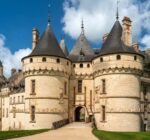


High in the karst hills of Slovenia, a castle clings to the face of a sheer cliff as if it grew there. Predjama Castle is not built on a rock — it is built into one, wedged inside the gaping mouth of a cave 123 metres above the valley floor. And the story of how it held out against an emperor’s fury is stranger than anything a novelist would dare invent.
A castle unlike anything else in Europe
Predjama takes its name from the Slovenian word for “cave” (jama). Unlike every castle you have ever visited, the structure does not sit atop rock or beside a hill. It occupies the mouth of a vast cavern, the cliff face becoming its rear wall, the cave itself extending deep into the mountain behind. Four wings, a drawbridge, and medieval towers — all suspended at a dizzying height, with the cave yawning open above.
Built in its current form in the late 16th century, though the site has been fortified since the 12th, Predjama feels genuinely impossible. Photographs look like someone composited a castle into a cliff face. They did not. This is real, and you can walk inside it.
The knight who made emperors furious
The castle’s most extraordinary chapter began in the 1480s, when it was home to a Slovenian knight named Erazem Lueger — known as Erazem of Predjama. A nobleman of fierce independence and a talent for provocation, Erazem had killed a favourite of the Habsburg Emperor Frederick III in a duel. The Emperor wanted him dead.
Erazem retreated to Predjama and refused to come out. What followed was one of the most remarkable sieges in Central European history.
The year-long siege that the cliff always won
The Habsburg army surrounded the castle. They had cannon, troops, and time. What they did not have was any way in.
The cliff face blocked any conventional assault. The single approach road was impossible to take under fire from the ramparts above. Week after week, the siege dragged on. Erazem, meanwhile, did not simply endure — he thrived. Hidden behind the castle, running through the cave system and emerging kilometres away on the far side of the hill, was a secret tunnel known only to those inside.
Through this tunnel, Erazem received fresh provisions, weapons, and supplies. He reportedly sent roasted oxen and fresh cherries to Frederick’s camp as a taunt — to show he was eating well while the besieging army shivered in the valley below. The siege lasted more than a year. The castle did not fall. It brings to mind Dover Castle’s own famous secret tunnels — though Predjama’s were dug to sustain life rather than end a war.
Love exploring the world? Join thousands of travellers who get stories like this every week. Subscribe free →
How a traitor changed everything
In the end, it was not force of arms that ended Erazem’s defiance. It was a servant.
Legend holds that Erazem made one small, human error: he told a trusted servant his daily routine — including his visits to the outdoor privy built into a small opening on the cliff face. The servant signalled the besieging troops with a cloth hung from a window at the critical moment. A cannon was fired. Erazem of Predjama did not survive.
The servant was rewarded. History does not record with much warmth whether he ever felt at ease again. The castle passed to the Habsburgs. The cave fell silent.
What you’ll find inside today
Predjama Castle is open to visitors year-round, and it genuinely astonishes even well-travelled visitors. The interior preserves original stone rooms, defensive passages carved into the rock, and access to portions of the cave system extending behind the structure. There are exhibits on Erazem’s life, the siege, and the castle’s later history through the Renaissance and beyond.
The cave system itself — over 13 kilometres of underground passages complete with an underground river — is managed separately as Predjama Cave and can be visited on a guided tour. Most visitors combine both in a single day alongside the nearby Postojna Cave — the second most-visited attraction in Slovenia, home to the world’s longest cave railway.
If Predjama has sparked a passion for castles that defy expectation, the most haunting castle ruins in Europe are equally worth exploring — places where the walls may have crumbled but the stories have not.
Is Predjama Castle worth visiting?
Unquestionably. It is one of the most visually dramatic castles in Europe, and the story of Erazem’s year-long siege adds genuine historical depth. Allow two to three hours for the castle itself, more if you plan to explore the cave system below. Book tickets in advance during summer — it fills up.
Can you visit the cave behind Predjama Castle separately?
Yes — Predjama Cave is ticketed separately from the castle but both are managed under the same Postojna Cave tourism group. Guided tours run regularly and take around 45 minutes. The cave includes a dramatic underground river and passages carved by water over millions of years.
How do you get to Predjama Castle from Ljubljana?
Predjama Castle sits near the town of Postojna in southwestern Slovenia, roughly one hour’s drive from Ljubljana. There is no direct public transport to the castle itself; the most practical options are to hire a car, join an organised day tour from Ljubljana, or take a bus to Postojna and arrange a taxi or transfer for the final 9 kilometres.
For Those Who Dream In Miles
Every week, get travel stories that take you somewhere extraordinary — castles, coastlines, hidden villages, and the roads less travelled.
Love more? Join 64,000 Ireland lovers → · Join 43,000 Scotland lovers →
Free forever · One email per week · Unsubscribe anytime
Predjama Castle is proof that the most extraordinary places on earth are sometimes hiding in plain sight — if plain sight means the mouth of a cave halfway up an impossible cliff. Once you have seen it, it is very difficult to unsee.