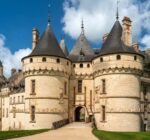


The first glimpse of Pena Palace arrives in fragments: a flash of ochre, then crimson, then custard yellow breaking through the pine canopy. Sitting 500 metres above sea level in Portugal’s Sintra mountains, the palace looks less like a product of history and more like something dreamt into existence—a confection of battlements, onion domes, Manueline tracery, and oriels painted in shades no sober architect would dare propose. Yet for all its storybook exuberance, Pena is deeply rooted in 19th-century Romanticism, royal ambition, and a ruined monastery’s second life.

From Hieronymite Monastery to Royal Fantasy
The site’s origins are monastic. In 1503, King Manuel I of Portugal founded a small Hieronymite monastery dedicated to Our Lady of Pena, perched on one of Sintra’s highest peaks. For three centuries, a handful of monks lived here in austere devotion, until the 1755 Lisbon earthquake reduced much of the structure to rubble. The ruins languished, exposed to Atlantic winds and ivy, until 1838, when King Ferdinand II—a German prince consort married to Queen Maria II—acquired the site and set about transforming it.
Ferdinand was no distant patron. He sketched, selected colours, debated turret heights, and personally oversaw the planting of the surrounding park with species from five continents: sequoias from California, tree ferns from Australia, camellias from Japan. His architect, Baron Wilhelm Ludwig von Eschwege, wove together Gothic, Manueline, Moorish, and Renaissance motifs into a coherent—if wildly eclectic—whole. Construction wrapped in 1854, and the palace became Ferdinand’s summer retreat and creative laboratory, a place where royal duty gave way to watercolour painting, botany, and operatic evenings.

A Catalogue of Architectural Borrowings
Pena’s genius—or its madness, depending on taste—is its unabashed eclecticism. The Triton Gate, a monumental arched entrance flanked by a carved sea creature, announces the palace’s Romantic agenda: myth and history collapsed into ornament. Inside, the original monastery cloister survives, its azulejo tiles intact, a quiet counterpoint to the maximalist rooms that follow. The Queen’s Terrace commands views across the Serra de Sintra to the Atlantic; on clear days, you can see Lisbon’s outline shimmering in the haze.
The interiors preserve the domestic life of Portuguese royalty in surprising detail. Ferdinand’s study retains its trompe-l’œil ceiling; the Stag Room, named for its plasterwork, still holds the furniture arranged as it was during the last royal occupants. The palace remained in use by the royal family until 1910, when Portugal’s republican revolution ended the monarchy. Shortly after, Pena became a national monument, and in 1995, UNESCO inscribed it—alongside Sintra’s wider cultural landscape—on the World Heritage list.

The Park: Ferdinand’s Living Canvas
The palace is inseparable from its 200-hectare park, a Romantic landscape where winding paths lead past artificial lakes, grottoes, and follies. Ferdinand personally directed the planting, commissioning seeds and saplings from botanical gardens worldwide. The result is a forest that feels both wild and composed, with microclimates created by Sintra’s notorious fog and altitude. In spring, rhododendrons and magnolias bloom in profusion; in autumn, the imported maples turn scarlet against the evergreen backdrop.
Two other palaces share Sintra’s hills—Quinta da Regaleira, with its initiation wells and esoteric symbolism, and the medieval National Palace in the town centre—but Pena remains the visual anchor, visible from almost every vantage point in the region. It’s also a masterclass in how Romantic nationalism used architecture: Ferdinand, a foreigner by birth, created a monument that synthesised Portugal’s diverse historical influences into a single, unapologetically joyful building.
Planning Your Visit
Pena Palace sits just 30 kilometres west of Lisbon, an easy day trip by car or train to Sintra station, followed by bus 434 or a steep uphill walk. The palace opens daily, though winter fog can obscure views; summer mornings offer the best light and thinner crowds. Pre-book tickets online to skip queues—Pena is Portugal’s most-visited monument after the Tower of Belém. Allow at least two hours to tour the palace and an additional hour to explore the park’s upper trails.
Sintra rewards slow exploration. Pair Pena with the Moorish Castle, whose 10th-century walls snake along the ridge below, or descend into town for pastéis de Sintra, the local almond-and-cheese pastries. If you’re drawn to the ways royal patrons shaped landscape and architecture to express personal vision, Neuschwanstein offers a Bavarian parallel—though Ludwig II’s fortress lacks Ferdinand’s chromatic daring.
Subscribe to Love Castles for weekly dispatches from the world’s most compelling palaces, estates, and ruins—delivered every morning to your inbox.
Further reading
- Parques de Sintra official website — ticketing, hours, and visitor information
- UNESCO World Heritage listing for the Cultural Landscape of Sintra — official inscription details
- Direção-Geral do Património Cultural — Portugal’s national heritage register