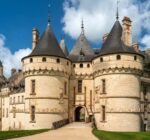


There is a castle in the English countryside that has never quite been conquered — not by armies, not by time, and certainly not by anonymity. Leeds Castle sits on two small islands in a lake in the heart of Kent, and it has spent nine centuries making an impression on everyone who has ever crossed its bridge.
Lord Conway declared it “the loveliest castle in the world” in 1932. Very few people who have stood at the water’s edge on a clear morning would disagree.
Built for a queen
The story begins long before the Norman Conquest. The name Leeds comes from Led, an Anglo-Saxon chief minister who held the estate in the time of King Ethelbert of Kent — around 857 AD. The first stone castle was built in 1119 by Robert de Crevecoeur, a Norman baron who saw the natural islands in the River Len as the perfect foundation for a fortress.
It was Edward I who changed the castle’s character entirely. In 1278, he purchased Leeds as a private retreat for his beloved queen, Eleanor of Castile. He enlarged the gloriette — the inner castle sitting on the smaller of the two islands — added new towers, and transformed a military fortress into a palace. Leeds Castle became, from that moment, a royal residence rather than a stronghold, and it would remain so for centuries.
Eleanor was the first of six medieval queens to call Leeds home.
The six queens who shaped it
After Eleanor came Margaret of France, who received the castle when she married the widowed Edward I in 1299. Then Isabella of France, wife of Edward II, who held it during the political turmoil of the 1320s. Then Joan of Navarre, queen of Henry IV, who was briefly imprisoned at Leeds on dubious charges of witchcraft before being acquitted and restored to favour.
The most celebrated connection is with Henry VIII and Catherine of Aragon. Henry spent lavishly on Leeds in the early years of their marriage, using it as a royal residence and hunting retreat. Catherine lived here while the young king transformed the English court into the most glamorous in Europe. Much of the great hall and domestic apartments date substantially from this period.
Henry VIII’s obsession with queens is one of the defining stories of English history. Leeds Castle’s quiet record of six queens is a different kind of story: a place that women chose, that women shaped, and that survived everything that came after them.
The love story behind another great English castle’s transformation is equally extraordinary — Robert Dudley spent a king’s ransom at Kenilworth Castle to win Elizabeth I’s heart, leaving behind one of the most romantic ruins in England.
Love exploring the world? Join thousands of travellers who get stories like this every week. Subscribe free →
The woman who rescued it
After the Tudor monarchs lost interest in Leeds, the castle passed through various private hands and fell into gradual decline. Soldiers garrisoned here during the Civil War. The estate changed ownership repeatedly. By the early 20th century, it needed serious attention.
Enter Lady Olive Baillie. In 1926, this American-British heiress purchased Leeds Castle and began nearly five decades of painstaking restoration. She hired the finest European decorators, acquired beautiful furniture and art from across the continent, and turned Leeds into one of the great private houses of the 20th century.
Her guest list was extraordinary: Errol Flynn, Charlie Chaplin, Douglas Fairbanks, Edward VIII, Winston Churchill — all came to stay. Leeds Castle became, under Lady Baillie, a place that was simultaneously a piece of medieval England and the setting for the most glamorous house parties of the interwar years.
When she died in 1974, she left the castle to a charitable foundation, with the instruction that it should benefit the nation and “provide a place where those who make great decisions can make them well.” That instruction proved more than sentiment.
Where history is still being made
In September 1978, Leeds Castle hosted secret preliminary discussions between Egyptian, Israeli, and American representatives — the quiet conversations that helped prepare the ground for the Camp David Accords and the first peace treaty between Egypt and Israel. The setting was chosen deliberately: somewhere beautiful, discreet, and entirely removed from the pressures of formal diplomacy.
It was not a one-off. Leeds Castle has hosted NATO foreign ministers, European diplomatic summits, and innumerable private meetings over the decades. It continues to be used for high-level conferences today — a castle that served six medieval queens is still, quietly, shaping events.
If the idea of English castles playing a role in world history captures your imagination, the secret tunnels beneath Dover Castle tell an equally astonishing story — how a medieval fortress helped coordinate the rescue of 338,000 soldiers from Dunkirk.
What to expect when you visit
Leeds Castle tours take in 500 acres of grounds, gardens, and woodland. The Great Water — the lake wrapping around the two islands — is as beautiful as any castle setting in England. The gloriette reflected in calm water on a clear morning is genuinely one of the finest sights in Kent.
Inside, tours move through rooms decorated across eight centuries. The medieval stonework, Tudor apartments, and Lady Baillie’s elegant 20th-century interiors sit side by side — each layer adding something distinct, nothing feeling out of place.
The grounds include a yew-tree maze with a grotto at its centre, a birds-of-prey centre with daily flying displays, a herb garden, and extensive parkland. In summer, the estate hosts open-air concerts and food festivals. In winter, the grounds come alive with Christmas markets and seasonal events.
Leeds Castle sits just off junction 8 of the M20, about 40 miles south-east of London. Trains run from London Victoria and London Bridge to Bearsted station, with connecting shuttles on busy days. For anyone touring England’s most spectacular castles, Leeds deserves a full day.
Frequently asked questions
Where is Leeds Castle, and how do I get there?
Leeds Castle is located near Maidstone in Kent, roughly 40 miles south-east of London. By car, take junction 8 of the M20. By rail, trains run from London Victoria or London Bridge to Bearsted station, with connecting shuttle buses to the castle on busier days. There is a large on-site car park for drivers.
Why is it called Leeds Castle if it’s not near Leeds?
The name has nothing to do with the Yorkshire city. It comes from Led — also recorded as Ledi or Esledes — an Anglo-Saxon chief minister who held the estate around 857 AD, many centuries before the city of Leeds took its name from the same Old English root. The two places share a linguistic ancestor and nothing else.
Can you go inside Leeds Castle?
Yes. The castle interior is open to visitors as part of standard admission, with tours taking in the medieval gloriette, the Tudor-era great hall, and the beautifully decorated private apartments restored by Lady Olive Baillie. The grounds are included in admission and warrant at least as much time as the interior.
Which queens lived at Leeds Castle?
Six medieval queens were associated with Leeds Castle: Eleanor of Castile (wife of Edward I), Margaret of France (second wife of Edward I), Isabella of France (wife of Edward II), Joan of Navarre (wife of Henry IV), and Catherine of Aragon (wife of Henry VIII). Each queen either lived at Leeds, held it as a dower property, or had significant personal connection to the castle during her time as queen.
For Those Who Dream In Miles
Every week, get travel stories that take you somewhere extraordinary — castles, coastlines, hidden villages, and the roads less travelled.
Love more? Join 64,000 Ireland lovers → · Join 43,000 Scotland lovers →
Free forever · One email per week · Unsubscribe anytime
Nine centuries is a long time to keep impressing people. Leeds Castle has never once looked like it was trying. That, perhaps, is what makes it the loveliest.