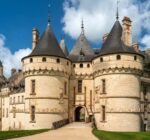


There is a castle in northern Poland so vast it dwarfs Windsor, Edinburgh, and every fortress you’ve ever stood beneath. It stretches across 21 hectares of riverbank. At its peak, it housed an army of 3,000 warrior monks. It took three centuries to complete. And most people have never heard of it.
Its name is Malbork. It is the largest castle ever built on Earth.
Built by warrior monks
In 1274, a religious military order known as the Teutonic Knights began construction on the banks of the Nogat River in what is now northern Poland. The Teutonic Knights were not ordinary monks. They fought crusades across the Baltic, carving out a military state in Prussia with fire, sword — and, most enduringly, brick.
Malbork became their headquarters. What began as a modest defensive outpost grew, over the next 150 years, into one of the most formidable fortresses on earth. Hundreds of thousands of bricks were fired and laid. Towers rose from the flat marshland. Walls three metres thick enclosed an entire world.
By the early 15th century, Malbork was not merely a castle. It was a capital.
Three castles in one
Most people imagine a castle as a single building. Malbork is three. The complex divides into the High Castle, the Middle Castle, and the Lower Castle — each with its own purpose, its own walls, its own moat.
The High Castle is the oldest and most sacred, containing the Chapel of the Blessed Virgin Mary, where the Grand Masters of the Teutonic Order were buried. The Middle Castle held the Grand Master’s Palace, great halls, and a refectory capable of seating hundreds at banquet. The Lower Castle housed stables, armouries, and the practical machinery of a medieval state.
Walk from one end to the other and you cover more than half a kilometre. In 1997, UNESCO added Malbork to its World Heritage list, calling it “a masterpiece of medieval brick architecture.”
If you’re drawn to Eastern Europe’s most extraordinary castles, Malbork belongs at the very top of your list.
The siege that never succeeded
In 1410, a combined Polish-Lithuanian army defeated the Teutonic Knights at the Battle of Grunwald — one of the largest battles of the Middle Ages. The Knights fled. Malbork was surrounded. What followed was a siege lasting over two months.
The castle never fell.
Supplied by river and defended by hired swords, the fortress held until the besieging army gave up. Poland would eventually take possession of Malbork in 1457 — not through force, but through the very practical business of paying the mercenaries the Knights could no longer afford. The soldiers handed the keys over. The greatest castle in the world changed hands like a debt.
To understand how castles were really taken — and just how rarely they fell to direct assault — read our piece on the siege tactics no one talks about.
Love exploring the world? Join thousands of travellers who get stories like this every week. Subscribe free →
Destruction and resurrection
Malbork survived centuries of shifting empires. The Teutonic Knights gave way to Polish kings, then Prussian rulers, then Napoleon, then the German Empire. Each new master left their mark.
The worst came last. In 1945, Soviet forces fought their way across northern Poland and the castle bore the full weight of the conflict. By the time the guns fell silent, over half the complex lay in ruins.
What followed is one of the great acts of cultural restoration in European history. Polish archaeologists and craftspeople began the painstaking work of rebuilding — brick by brick, arch by arch, using medieval techniques wherever possible. Work continues today. Malbork is the largest ongoing castle restoration project in Europe. It puts Europe’s most haunting ruins in a different light: sometimes the broken ones get put back together.
What you’ll find inside today
Malbork is one of Poland’s most visited attractions — which, outside Poland, still manages to feel like a secret. Entry gets you access to the Grand Master’s Palace, with great vaulted ceilings restored to something close to medieval splendour, and a museum of extraordinary range.
The amber collection alone is worth the journey. Poland sits at the heart of Baltic amber country, and Malbork holds the world’s largest collection of worked amber objects — jewellery, carvings, and curiosities spanning centuries.
In summer, the castle hosts a medieval tournament: knights in armour, archers, the whole spectacle. In winter, the brick walls turn amber in the low afternoon light and the courtyards fall almost silent. Either way, you will feel very small.
How to get there
Malbork sits just 58 kilometres from Gdańsk. Fast trains make the journey in under 30 minutes, and the castle is a 10-minute walk from Malbork station. Budget a minimum of three hours — many visitors find themselves staying five.
Entry costs around €15 for adults, with guided tours available in multiple languages. The best light for photography falls in early morning or late afternoon, when the red brick glows against the sky.
How big is Malbork Castle?
Malbork covers approximately 21 hectares (52 acres), making it the largest castle in the world by land area. Windsor Castle, for comparison, covers around 13 hectares.
Who built Malbork Castle?
Malbork was built by the Teutonic Knights, a Germanic military-religious order, beginning in 1274. Construction continued for over a century as the castle expanded into a three-part complex of High, Middle, and Lower fortresses.
Is Malbork Castle worth visiting?
Absolutely. It is one of the most impressive medieval sites in Europe, often called Poland’s greatest secret by those who’ve made the trip. Combined with a visit to Gdańsk, it makes for one of the most rewarding day trips on the continent.
For Those Who Dream In Miles
Every week, get travel stories that take you somewhere extraordinary — castles, coastlines, hidden villages, and the roads less travelled.
Love more? Join 64,000 Ireland lovers → · Join 43,000 Scotland lovers →
Free forever · One email per week · Unsubscribe anytime
Most castles demand your admiration. Malbork demands something more — a reckoning with the scale of human ambition. Three centuries. Three million bricks. One river. And a building that outlasted every empire that ever claimed it. It is waiting for you in Poland.