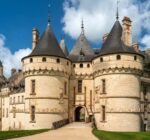


Most people name Windsor or Neuschwanstein when asked about the world’s greatest castle. Both are wrong. The largest castle ever built sits in a small Polish town on the banks of the Nogat River — and most travellers have never heard of it.
Malbork Castle covers more than 21 hectares. That is four times the size of Windsor. It was raised by a brotherhood of warrior monks, nearly destroyed in a single war, and then pieced back together stone by stone. The result is one of the most extraordinary places in Europe.
Warrior monks and an empty wilderness
The Teutonic Knights arrived in the Baltic region in the 1230s. They were a military religious order — part crusaders, part monks — commissioned to Christianise the pagan tribes of the east. They needed a base.
In 1274, they began building a fortress on the banks of the Nogat River in what is now northern Poland. The land was flat and marshy. There was no natural hill, no rocky outcrop, no existing fortification to build upon. They raised it from nothing.
What began as a modest brick stronghold grew over two centuries into the largest Gothic castle complex ever constructed. At its peak, Malbork housed the Grand Masters of the Teutonic Order and functioned as the capital of a powerful medieval state stretching across the Baltic coast.
Three castles in one
Malbork is not one castle but three, each built within the other.
The High Castle is the oldest section, containing the chapter house, the Golden Gate, and the Church of the Virgin Mary. Its rooms are severe and austere — this was where the monks lived and prayed.
The Middle Castle is where the Grand Masters held court. The Great Refectory here is one of the finest Gothic halls in Europe. Palm-vaulted ceilings rise above long stone tables where hundreds of knights once dined.
The Lower Castle served as the outer defensive ring, housing granaries, stables, and workshops. Together, the three sections formed a self-contained medieval city capable of withstanding a siege for months.
For further reading on equally dramatic Eastern European castles, the Romanian castle that outshines Neuschwanstein is well worth your time.
Love exploring the world? Join thousands of travellers who get stories like this every week. Subscribe free →
Destruction and return
The Teutonic Order’s power faded in the 15th century. Poland took control of Malbork in 1457 after a thirteen-year war, and the castle passed through Prussian and then German hands over the following centuries. By the 20th century, much of it lay in disrepair.
Then came the Second World War. When Soviet forces reached Malbork in early 1945, the fighting reduced roughly half of the castle to rubble. The Great Refectory collapsed. The Grand Masters’ Palace burned. What had survived seven centuries of conflict nearly perished in a matter of weeks.
What happened next is remarkable. Polish conservators, working under Soviet occupation with almost no resources, began the painstaking process of reconstruction. Stone by stone, arch by arch, they rebuilt what had been lost. The project took decades and is still continuing today.
In 1997, Malbork was inscribed as a UNESCO World Heritage Site. The citation praised not only the castle’s architecture but the restoration itself — one of the most ambitious heritage projects in European history.
What you will find inside
Malbork Castle Museum houses extraordinary collections. The amber gallery is among the finest in the world — the Baltic coast nearby has been a source of amber for thousands of years, and the Teutonic Knights taxed its trade heavily. Carved amber artefacts, jewellery, and raw specimens fill entire rooms.
There are armour galleries, medieval weaponry, and beautifully preserved Gothic interiors. The Grand Masters’ Palace has been so carefully restored that standing inside it feels genuinely medieval. Audio guides are available in multiple languages, and English-language guided tours run through the summer months.
Allow at least three hours — most visitors find they need more. For another extraordinary Eastern European castle with a remarkable story, Orava Castle in Slovakia is well worth adding to your itinerary.
Getting there
Malbork sits about 60 kilometres south-east of Gdańsk. Trains run frequently between the two cities and the journey takes roughly 30 to 40 minutes. The castle is an easy walk from Malbork station.
From Warsaw, the journey takes roughly two hours by direct train. Malbork makes an excellent day trip from either city, though staying overnight gives you the evening light on the red-brick towers — and that is something worth seeing.
Frequently asked questions
How big is Malbork Castle?
It covers approximately 21 hectares, making it the largest castle in the world by land area. The complex includes three separate fortifications — the High Castle, Middle Castle, and Lower Castle — connected by a series of gates and courtyards. For comparison, Windsor Castle covers around 5 hectares.
Is Malbork Castle worth visiting?
Yes. It is a UNESCO World Heritage Site and one of the finest examples of Gothic brick architecture anywhere in Europe. The amber collection, the Grand Masters’ Palace, and the sheer scale of the complex make it genuinely unmissable. Most visitors are surprised they had never heard of it before they arrived.
How long does it take to visit Malbork Castle?
Allow at least three hours for a basic visit. The castle is enormous, and the museum collections are extensive. Many visitors spend half a day or more exploring the three castle sections, the amber gallery, and the medieval interiors. Guided tours are available if you want the full historical context.
For Those Who Dream In Miles
Every week, get travel stories that take you somewhere extraordinary — castles, coastlines, hidden villages, and the roads less travelled.
Love more? Join 64,000 Ireland lovers → · Join 43,000 Scotland lovers →
Free forever · One email per week · Unsubscribe anytime
Malbork has been standing for more than 750 years. It survived crusades, wars, and near-total destruction — and it is still here. Walk through its gates and you are standing inside one of the greatest buildings ever raised by human hands. There are places that remind you how extraordinary history is. This is one of them.