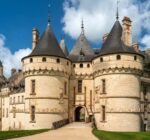


The first glimpse of Hunyad Castle stops you cold. The fortress rises from a rocky spur above the Zlasti River in central Transylvania, its turrets and parapets arranged in a jagged skyline of crenellations, Gothic spires, and pale stone. A wooden drawbridge spans the ravine, leading to a vast courtyard enclosed by walls that have witnessed six centuries of siege, intrigue, and reconstruction. This is not the tourist-friendly castle of legend—it is the real thing, a military and political seat whose architecture evolved from blunt medieval pragmatism into one of Europe’s most striking examples of late-Gothic design.

Built by the Raven King
Hunyad Castle—also known as Corvin Castle—stands in Hunedoara, a former mining town in the shadow of the Carpathian Mountains. The fortress was begun in the 14th century on the ruins of an earlier fortification, but its transformation into a palace-fortress is the work of one man: John Hunyadi, Voivode of Transylvania and Regent of Hungary, who received the estate in 1446 from King Matthias Corvinus’s father. Hunyadi was a military commander of legendary repute, credited with halting the Ottoman advance at the Siege of Belgrade in 1456. His crest—a raven clutching a golden ring—still adorns the castle walls, and his legacy saturates every stone.
Between 1446 and his death in 1456, Hunyadi rebuilt the fortress as both defensive stronghold and noble residence. The Knight’s Hall, with its soaring rib-vaulted ceiling and double rows of lancet windows, dates from this period. So does the Diet Hall, where Transylvanian nobles convened. The castle was further embellished by his son, Matthias Corvinus, King of Hungary, who added the ornate Matthias Loggia and the Chapel Tower, blending Gothic military architecture with early Renaissance decorative flourishes. By the late 15th century, Hunyad was one of the largest castles in Europe, covering more than 7,000 square metres.

From Glory to Ruin and Back
After Matthias’s death in 1490, the castle passed through a succession of noble families, each leaving their mark. The Báthory family expanded the fortifications in the 16th century; the Bethlen princes added Baroque elements in the 17th. But by the 19th century, Hunyad had fallen into romantic ruin—its roofs collapsed, its towers open to the sky. A fire in 1854 gutted much of the interior.
Restoration began in earnest in 1868 under architect Imre Steindl, who rebuilt much of what visitors see today. His work was faithful to the Gothic original but also interpretive, adding neo-Gothic details that blur the line between medieval and 19th-century reconstruction. Critics debate the accuracy of Steindl’s vision, but the result is undeniably dramatic. Unlike Bran Castle, which trades heavily on its Dracula associations, Hunyad wears its history on its façade—authentic layers of military necessity, noble ambition, and romantic revival.

Legends in Stone
No Transylvanian castle is complete without its share of myth. A well in the castle courtyard, carved by Turkish prisoners over 15 years, is said to have been dug in exchange for freedom—a promise never honoured. Another legend places Vlad Țepeș, the historical Dracula, in Hunyad’s dungeons for seven years after his arrest in 1462. While the chronology is disputed, the dungeon itself is real: a low, vaulted chamber beneath the Council Tower, equipped with iron rings and a trapdoor to the river below.
More verifiable is the castle’s role as a symbol of resistance. John Hunyadi’s victory at Belgrade halted Ottoman expansion into central Europe for decades, and Hunyad became a pilgrimage site for those who saw the fortress as the bulwark of Christendom. In modern Romania, the castle is a national monument, its image reproduced on coins, stamps, and tourism posters—a rare case where the symbol matches the substance.
Planning Your Visit
Hunyad Castle is open year-round, though winter visits offer a particular atmosphere—frost on the turrets, mist rising from the river gorge, and far fewer crowds than in summer. The castle is located in Hunedoara, roughly 90 kilometres south of Cluj-Napoca and 50 kilometres from Deva. Guided tours in English are available, though much of the castle is self-explanatory if you take your time in the Knight’s Hall, the Chapel, and the rooftop walkways, which offer views over the town and surrounding hills.
Allow at least two hours for a full visit. The castle lacks the polished interpretive signage of Western European heritage sites, but printed guides are available at the entrance. If you’re planning a broader Transylvanian itinerary, pair Hunyad with the Saxon fortified churches or the painted monasteries of Bucovina. And if you want weekly castle stories delivered to your inbox—places that reward depth over hype—subscribe to Love Castles and never miss a Monday portrait.
Further reading
- Corvin Castle official website — visitor information, opening hours, and history
- UNESCO Tentative List: Corvins’ Castle — nomination dossier and heritage assessment
- Encyclopædia Britannica: John Hunyadi — biography of the castle’s founder and his military campaigns