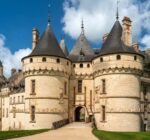


France has over 40,000 chateaux. Most tourists visit three of them.
They queue for Versailles. They photograph Chambord. Meanwhile, some of the most extraordinary fortresses, palaces, and fairytale residences in Europe sit quietly, waiting.
Chateau de Chenonceau: the castle that bridges two worlds
Spanning the River Cher on a series of elegant arches, Chenonceau is the most distinctive chateau in the Loire Valley. Built in the early 16th century, it became known as the chateau des dames, shaped by six remarkable women who owned or occupied it over the centuries.
During the Second World War, its position made it extraordinary. The river below marked the border between occupied and free France. The chateau’s own bridge became a crossing point for those fleeing persecution. Walk across it today and that history stays with you.
Chenonceau sits 35 kilometres east of Tours. Arrive early. The light off the water in the morning is worth the journey on its own.
Carcassonne: the walled city that never fell
Technically a citadel rather than a chateau, Carcassonne is unlike anything else in France. This is a medieval city, not a ruin, not a monument, but a place where people still live within three kilometres of double walls and 52 towers.
The Romans built the first fortifications here. The Visigoths expanded them. In the 19th century, architect Eugene Viollet-le-Duc restored the entire complex from near-ruin. Standing on the ramparts at dusk, with the Pyrenees on the horizon and the lower town glowing below, is unforgettable.
Stay the night if you can. The day-trippers leave after dark, and what remains belongs entirely to you.
Chateau de Val: the castle that refused to drown
In 1959, the French government completed the Bort-les-Orgues dam in the Correze region, flooding the valley below. An entire landscape disappeared beneath the new reservoir.
The 15th-century Chateau de Val did not.
Perched on a rocky promontory that became an island, it rose above the waterline with its six pepper-pot towers intact. Today you reach it across a narrow causeway. A medieval fortress surrounded by still water, looking exactly as a castle ought to look, in a landscape no medieval lord ever imagined.
It is one of the most striking sights in France. Almost nobody outside the Auvergne has heard of it.
Love exploring the world? Join thousands of travellers who get stories like this every week. Subscribe free →
Chateau d’Amboise: where Leonardo da Vinci spent his last years
At the eastern end of the Loire Valley, Chateau d’Amboise sits high above the river on a rocky spur. French kings lived here throughout the 15th and 16th centuries. But the chateau’s strangest distinction is this: Leonardo da Vinci spent his final three years within walking distance of it.
King Francis I invited the ageing genius to live at the nearby Chateau du Clos Luce. He visited Amboise regularly. When Leonardo died in 1519, he was buried in the chateau’s Chapel of Saint-Hubert.
That small Gothic chapel still stands today. It is one of the quieter experiences in the Loire Valley, and one of the most memorable.
Chateau de Fontainebleau: eight centuries of royal ambition
Versailles gets the crowds. Fontainebleau gets the history.
Every French monarch from Louis VII to Napoleon III left their mark on this palace in the forests south of Paris. It was here that Francis I imported Italian Renaissance art and architecture into France. It was here that Napoleon said farewell to his Imperial Guard before his exile. Today you can walk through its 1,500 rooms with a fraction of the crowds Versailles attracts.
The forest surrounding it is magnificent for walking. The town of Fontainebleau, which wraps around the palace, is exactly the kind of place you stop meaning to visit briefly and end up staying two nights.
Can you stay in a French chateau?
Many can, and the experience is extraordinary. Chateau de Bagnols in Beaujolais dates from the 13th century and has fewer than 50 rooms. Chateau de Vault-de-Lugny in Burgundy still feels like a private home.
Search specifically for chateau-hotel rather than just “hotel” near your destination. You will find options that are more atmospheric, and sometimes surprisingly affordable outside peak season. Our guide to the best castle hotels in Europe covers the full continent.
The Loire Valley chateaux beyond the famous ones
The Loire Valley stretches for more than 280 kilometres and contains hundreds of chateaux. Most visitors see four or five of the famous names. But Chateau de Villandry has the most extraordinary formal gardens in France. Chateau de Chaumont-sur-Loire hosts an annual international garden festival. Chateau d’Usse, perched above the Indre river, is said to have inspired Charles Perrault’s Sleeping Beauty.
Drive slowly. Stop when something catches your eye. The Loire rewards the unhurried traveller more than anywhere else in France. For more unexpected discoveries, our guide to Eastern Europe’s hidden fairytale castles is worth your time.
Frequently asked questions
Which French chateau is the most beautiful?
Beauty is subjective, but Chateau de Chenonceau is the most architecturally distinctive, spanning a river on elegant arches in golden Loire stone. For sheer romance, Chateau d’Usse is hard to beat. For the unexpected, Chateau de Val on its reservoir island is unlike anything else in France.
How many chateaux are in the Loire Valley?
The Loire Valley contains around 300 chateaux, of which roughly a dozen are regularly visited by tourists. The valley’s royal history stretches from the 10th century through the Renaissance, and the entire region is a UNESCO World Heritage Site.
Is it expensive to visit French chateaux?
Entry costs vary. Major sites like Versailles can cost 20 to 30 euros per person. Many smaller chateaux charge 8 to 12 euros. France’s Heritage Days weekend each September sees many sites open free of charge.
What is the difference between a chateau and a castle?
The French word chateau covers everything from feudal fortresses to aristocratic country houses. Not every chateau was built for defence. Many were designed to impress, entertain, and demonstrate wealth. In English, “castle” implies military purpose; in French, chateau simply means a grand residence of historical significance.
For Those Who Dream In Miles
Every week, get travel stories that take you somewhere extraordinary – castles, coastlines, hidden villages, and the roads less travelled.
Love more? Join 64,000 Ireland lovers → – Join 43,000 Scotland lovers →
Free forever – One email per week – Unsubscribe anytime
France has 40,000 chateaux. A lifetime of Sundays would not cover them. Start somewhere beautiful, and go slowly.