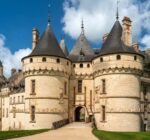


Deep in the Aberdeenshire countryside, a tower of raspberry-pink stone rises above a forest of ancient pines. There are no signs pointing to it from the main road. No gift shop visible from the car park. Just the sudden, startling sight of a castle that looks as though someone plucked it from a storybook and placed it gently in the Scottish hills.
That castle is Craigievar. And it is, quite simply, one of the most beautiful buildings in Britain.
Built by a merchant, not a warrior
Craigievar was completed in 1626 by William Forbes, a merchant who’d grown rich trading with ports along the Baltic Sea. His nickname was “Danzig Willie” — a nod to the Polish city where much of his fortune was made.
He didn’t need a fortress. He needed a statement. And so he built one.
The castle is a tower house — a design peculiar to Scotland, where space matters less than height. Rather than sprawling outward, Craigievar reaches upward, seven storeys tall, crowned with turrets, bartizans, and corbelled balconies that serve no military purpose whatsoever. They are purely decorative. An architect’s flourish. A merchant’s ambition made stone.
Four hundred years of the same colour
The pink harling — rough-cast lime render applied directly to the stonework — has clothed Craigievar since it was built. The colour has remained almost unchanged for four centuries.
It is a shade difficult to name precisely. Not quite pink. Not quite salmon. Somewhere between the two, deepening at dusk and glowing on clear mornings. Locals sometimes call it “raspberry.” Others simply say it looks like a castle from a dream.
What makes the colour remarkable is that it was never a deliberate aesthetic choice. Harling was a practical solution — it sealed the stonework against the Scottish weather. The particular mix of local materials just happened to produce this extraordinary shade. The builders struck upon beauty without meaning to.
The interior that surprises everyone
Most visitors come for the exterior. They often forget to look up once they are inside.
Craigievar’s plaster ceilings are among the finest in Scotland. The great hall features intricate Renaissance plasterwork — coats of arms, mythological figures, and heraldic symbols that took skilled craftsmen years to complete. The quality is astonishing for a building in a remote corner of Aberdeenshire.
The hall also contains a massive fireplace bearing the Forbes family motto: “Do not waken sleeping dogs.” Whether wisdom or warning, the family followed it well. Craigievar was never attacked. Never besieged. Never burned.
Love exploring the world? Join thousands of travellers who get stories like this every week. Subscribe free →
A family home for three centuries
The Forbes family occupied Craigievar from the day it was completed until 1963 — three centuries and eleven generations in the same building. That extraordinary continuity preserved the castle in near-original condition.
When the Forbeses finally handed it to the National Trust for Scotland, they passed over a castle that had barely changed since the 1620s. Original furniture remained. Original stonework intact. Original plaster ceilings undamaged. It had simply been lived in, cared for, and handed on.
As a result, Craigievar is one of the most complete examples of a Scottish tower house in existence. It did not survive because someone decided to preserve it. It survived because a family never left.
Worth finding — even though it takes effort
Craigievar sits roughly 26 miles west of Aberdeen, at the end of winding country roads. It does not feature on most tourist itineraries. It does not appear in the same breath as Edinburgh or Stirling.
That is entirely to its advantage.
When you do find it, the car park is small, the crowds are thin, and the castle rises in front of you with the same unhurried drama it has been offering for four centuries. On a clear spring morning, with the pines dark behind it and the harling glowing pink in the early light, it is genuinely breathtaking.
If you’re planning a wider Scottish castle trip, Scotland’s most spectacular castles covers some of the country’s finest. And if the idea of sleeping inside a castle appeals, castles you can actually stay in includes some remarkable Scottish options.
Visiting Craigievar Castle
Craigievar is managed by the National Trust for Scotland. The castle opens seasonally — typically late spring through early autumn — with reduced access in winter. Interior visits are by guided tour, which includes the great hall, the plasterwork ceilings, and the full story of the Forbes family.
The surrounding grounds are worth a slow walk. The castle can be combined with other Aberdeenshire highlights: Crathes Castle, Drum Castle, and Balmoral are all within an hour’s drive. For travellers who enjoy the castles most visitors never find, Aberdeenshire deserves far more attention than it receives.
Is Craigievar Castle open to the public?
Yes. Craigievar Castle is managed by the National Trust for Scotland and open to visitors, typically from spring through early autumn. Interior access is by guided tour. Check the National Trust for Scotland website for current opening hours and admission prices before you travel.
Where is Craigievar Castle?
Craigievar Castle is in Aberdeenshire, Scotland, approximately 26 miles west of Aberdeen. The nearest village is Alford. It sits in a quiet rural setting surrounded by pine trees. There are no other major attractions immediately nearby — which is entirely part of its charm.
Why is Craigievar Castle pink?
The pink colour comes from the harling — a rough-cast lime render applied to the stonework when the castle was built in the early 1600s. The particular shade emerged from the local materials used in the mix. The harling also serves a practical purpose: it protects the stonework from Scotland’s weather. The colour has remained largely unchanged for four centuries.
Some castles are famous. Craigievar is something rarer — it is unforgettable. Long after you have left, the image stays with you: a tower of impossible pink rising quietly from the trees, as though it has always been there and always will be.
For Those Who Dream In Miles
Every week, get travel stories that take you somewhere extraordinary — castles, coastlines, hidden villages, and the roads less travelled.
Love more? Join 64,000 Ireland lovers → · Join 43,000 Scotland lovers →
Free forever · One email per week · Unsubscribe anytime