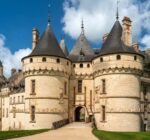


There are castles that dazzle you with grandeur. And there are castles that get under your skin in an entirely different way. Europe’s most haunted fortresses don’t just offer history — they offer something unexpected: a quiet, unsettling feeling that you are not quite alone.
These five castles have ghost stories rooted not in fiction but in documented horror — massacres, imprisonments, and disappearances that left marks no renovation could erase.
Leap Castle, Ireland — the castle that swallowed its own dead
Leap Castle in County Offaly holds a strong claim to the title of Ireland’s most haunted building. In 1532, the O’Carroll clan massacred their own kinsmen inside the castle’s chapel — a chamber now known simply as the Bloody Chapel. That was merely the beginning.
During renovations in the 1920s, workers discovered a hidden oubliette — a secret pit beneath the floor. Inside, they found the remains of hundreds of people, piled metres deep. Three cartloads of bone were removed from the site.
Local legend speaks of an entity called the Elemental — a dark, foul-smelling presence said to appear to those who challenge the castle’s history. Whether you believe in ghosts or not, standing inside Leap Castle’s crumbling walls has a way of making you hold your breath.
Houska Castle, Czech Republic — sealed over a hole to hell
Houska Castle in Bohemia is one of the strangest buildings in Central Europe. Built in the 13th century, it stands deep in forest with no strategic value, no water supply, and no access to trade routes. There was no logical military reason to build here.
According to local legend, Houska was constructed to seal a pit — a supposed gateway to the underworld — from which half-animal creatures were said to emerge. Early sources describe prisoners being lowered into the pit to report what they saw. Most reportedly went mad within seconds.
The castle’s chapel was built directly over the reported opening. Its frescoes include a left-handed archer — a symbol of the devil in medieval tradition — widely believed to be a deliberate warning carved for those who walked beneath it.
Love exploring the world? Join thousands of travellers who get stories like this every week. Subscribe free →
Glamis Castle, Scotland — the monster in the sealed room
Glamis Castle in Angus is famous as the childhood home of Queen Elizabeth The Queen Mother and the setting for Shakespeare’s Macbeth. But it carries a darker reputation. For centuries, the family — the Earls of Strathmore — was said to keep a monstrous secret locked in a room that appears on no floor plan.
Guests who tried to locate it by hanging towels from every window reportedly found one window with no towel — and no corresponding room visible from the outside. The secret was passed from father to heir on the eldest son’s 21st birthday, and the earls who learned it were said never to smile again.
Whether the Monster of Glamis was real or a piece of brilliant Victorian mythology, the story has never been put to rest. You can find out more in our guide: does the royal family still own Glamis Castle?
Château de Brissac, France — the green lady in the tower
Château de Brissac in the Loire Valley is France’s tallest castle — seven storeys of Renaissance grandeur. It is also, by reputation, home to one of France’s most famous ghosts.
In the 15th century, Jacques de Brézé discovered his wife Charlotte of France in the arms of her lover. He killed them both. Charlotte’s ghost — La Dame Verte, the Green Lady — is said to haunt the Tour du Moulin, appearing in a green dress with a hollowed, decayed face.
The château is still privately owned and open to visitors. Those who have stayed overnight report waking to a figure standing in the corner of their room. The estate maintains this is all part of the château’s colourful history — though they don’t discourage the legend either.
Corvin Castle, Romania — where the stones still remember
Corvin Castle — also known as Hunyadi Castle — rises from the Transylvanian hills like something from a darker century entirely. Gothic towers, spike-topped parapets, a deep moat below: this is a castle that means business.
It was here, according to legend, that Vlad the Impaler — the historical inspiration for Dracula — was imprisoned for seven years by the Hunyadis. Whether fully accurate or not, Corvin was certainly a place of grim ends. Inscriptions carved into the walls by prisoners awaiting execution can still be seen today.
For more on Romania’s castle connections to the Dracula legend, read: is there a real Dracula Castle?
Frequently asked questions
What is the most haunted castle in Europe?
Many ghost hunters point to Leap Castle in County Offaly, Ireland. Its history of massacre, a hidden pit filled with human remains, and reports of a malevolent entity called the Elemental make it one of the most genuinely unsettling castles on the continent. Houska Castle in the Czech Republic is a close second for the sheer strangeness of its origin story.
Can you visit Houska Castle?
Yes — Houska Castle is open to visitors for guided tours. It sits approximately 47 kilometres north of Prague. The tours cover the castle’s history, its unusual architecture, and the legends surrounding the pit it was supposedly built to contain. Worth combining with a wider trip to Bohemia.
Are the ghost stories at European castles based on real history?
Many have a genuine historical kernel. Mass killings, imprisonment, torture, and betrayal were common in medieval fortresses. The supernatural legends that grew around these events have been embellished over centuries, but the histories that inspired them are very much real — and sometimes far darker than the ghost stories they spawned.
For Those Who Dream In Miles
Every week, get travel stories that take you somewhere extraordinary — castles, coastlines, hidden villages, and the roads less travelled.
Love more? Join 64,000 Ireland lovers → · Join 43,000 Scotland lovers →
Free forever · One email per week · Unsubscribe anytime
The most haunted castles in Europe aren’t frightening because of Hollywood monsters. They’re unsettling because real people lived — and died — inside their walls, and the stones have not forgotten. That’s worth thinking about the next time you stand in a castle courtyard and feel a chill you can’t quite explain.