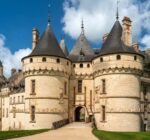


Scotland has over 2,000 castles. Most visitors see one. Here’s why the ones you haven’t heard of are often the most extraordinary.
Edinburgh Castle gets the crowds. Stirling gets the school trips. But across the Highlands, lowlands, and sea lochs, Scotland hides fortresses so dramatic they make the famous ones look ordinary.
Eilean Donan — the most photographed castle on earth
You’ve seen it on calendars. You’ve seen it on shortbread tins. But nothing prepares you for standing in front of Eilean Donan in person.
Built on a tiny island where three great lochs meet, this 13th-century castle was almost entirely destroyed in 1719 — blown apart during a failed Jacobite rising. What you see today is a painstaking reconstruction completed in 1932. The result is arguably the most perfectly situated castle in the world.
Go at dawn, when mist lifts off Loch Duich and the mountains reflect in the still water. In those moments, it feels less like a tourist attraction and more like a painting you’ve somehow walked into.
Dunnottar Castle — Scotland’s most dramatic ruin
If you want drama, head to the Aberdeenshire coastline and follow the clifftop path south of Stonehaven. Suddenly the land falls away — and there it is.
Dunnottar Castle sits on a 50-metre sea stack, completely cut off on three sides by sheer drops to the North Sea. The only approach is a narrow, winding path that would have been easy to defend.
This is where Scotland’s crown jewels were hidden during Oliver Cromwell’s invasion in 1651. They were smuggled out by a local woman, concealed beneath her clothing as she walked past enemy soldiers. The castle fell soon after, but the jewels survived. Today Dunnottar is a ruin — roofless towers and crumbling walls battered by North Sea wind. It’s all the more compelling for it.
Love exploring the world? Join thousands of travellers who get stories like this every week. Subscribe free →
Castle Stalker — the fortress nobody can reach
Thirteen miles north of Oban, on a tiny tidal island in Loch Laich, stands Castle Stalker. Four storeys tall. Completely alone.
There is no bridge. There is no public boat service. You can only reach it by private arrangement — which means most visitors stand on the shoreline and simply stare.
Castle Stalker appeared in Monty Python and the Holy Grail as Castle Aaargh. But this is no joke of a castle. Built in the 15th century as a hunting lodge for King James IV of Scotland, it was lost and won several times over the centuries in disputes so dramatic they read like a novel. Today it’s privately owned and largely unchanged. Its remoteness is both its protection and its greatest attraction.
Craigievar Castle — a fairy-tale tower in Aberdeenshire
Craigievar looks like someone asked a child to draw the perfect castle.
Seven storeys tall, painted a warm pink, with rounded towers and conical roofs rising from a Scots pine forest — it seems too beautiful to be real. Unlike many Scottish castles, Craigievar was never built for war. It was completed in 1626 as a wealthy merchant’s home, and it has barely changed since.
The National Trust for Scotland now cares for it. Visit on a quiet autumn morning when the trees are turning, and you’ll understand why Walt Disney is said to have drawn inspiration from its fairy-tale silhouette.
Tantallon Castle — defiant on a clifftop
East Lothian has its own dramatic ruin: Tantallon Castle, perched on a headland with the North Sea crashing against the cliffs below.
What makes Tantallon extraordinary is its curtain wall — a single massive slab of red sandstone, 15 metres high and over 3 metres thick, stretching between cliff edge and sheer drop. Three sides needed no wall at all. The sea cliffs were defence enough.
Built in the 1350s by William Douglas, it withstood multiple sieges before finally falling in 1651 — the same year as Dunnottar. You can walk through the gatehouse today and stand atop the wall with Bass Rock visible in the distance, white with nesting gannets.
Doune Castle — where history and Hollywood collide
Some castles are famous for what happened inside them. Doune Castle, in Stirlingshire, is famous for what was filmed inside them.
It doubled as Castle Aaargh in Monty Python and the Holy Grail, appeared as Winterfell in the Game of Thrones pilot, and featured in multiple scenes of Outlander. But Doune needs no Hollywood credentials to impress. Built in the late 14th century, it remains one of the best-preserved medieval castles in Scotland — its great hall, kitchens, and lord’s chambers largely intact.
If you’re planning a visit to central Scotland, our complete guide to Stirling Castle makes a perfect companion day trip — just 8 miles away. For castles with royal connections, our look at Glamis Castle and the royal family is well worth a read.
Frequently asked questions
What is the most scenic castle in Scotland?
Eilean Donan is widely considered the most scenic Scottish castle, set on a small island at the junction of three sea lochs in the western Highlands. Castle Stalker and Dunnottar are strong rivals — both sit on isolated rocky outcrops with spectacular natural settings.
Can you visit Castle Stalker?
Public access to Castle Stalker is limited as there is no regular boat service — the castle is privately owned. Occasional open days are announced by the owners, typically in late summer. For most visitors, the view from the A828 road along the shore of Loch Laich is extraordinary in its own right.
Which Scottish castles are best for a first-time visitor?
For a first visit, combine Edinburgh Castle (history and city views), Eilean Donan (scenery), and Doune Castle (atmosphere and accessibility). In Aberdeenshire, Dunnottar and Craigievar make a perfect pairing for a day out. All are open to the public and well signposted.
For Those Who Dream In Miles
Every week, get travel stories that take you somewhere extraordinary — castles, coastlines, hidden villages, and the roads less travelled.
Love more? Join 64,000 Ireland lovers → · Join 43,000 Scotland lovers →
Free forever · One email per week · Unsubscribe anytime
Scotland’s castles are not relics. They are landmarks of survival — each one standing because someone cared enough to defend it, rebuild it, or preserve it. Walk through their gates, and you walk through a thousand years of stories still being told.