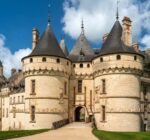


Tucked into a forested valley above the Moselle River, Burg Eltz does not announce itself. There are no motorway signs, no souvenir stalls, no crowds snaking around a ticket booth. You walk through ancient trees for forty minutes, and then — without warning — a tangle of medieval towers rises from the mist below you.
This is Germany’s best-kept castle secret, and it has remained in the same family for 33 generations.
A castle that defied history
Most medieval castles were captured, burned, or rebuilt at some point. Burg Eltz was not. Construction began in the 12th century — the castle is first recorded in documents from 1157 — and it has remained virtually unchanged since the 16th century, when the family stopped expanding it.
When the Archbishop of Trier besieged the castle in the 14th century, the Eltz family held firm. A compromise was eventually reached, and the castle survived intact. That stubbornness paid off across the centuries that followed.
Today, Burg Eltz contains original furniture, weapons, and artwork spanning 500 years. Not reconstructions — the genuine article. Walk through these rooms and you are seeing what medieval occupants saw.
Seven towers, three families
One of the strangest things about Burg Eltz is its architecture. The castle is not a single building but a cluster of seven residential towers, each once belonging to a different branch of the Eltz family. Three family branches lived here simultaneously during the Middle Ages, sharing a courtyard but maintaining entirely separate households.
The result is a castle that looks almost impossible — a jumble of towers and gables and half-timbered facades that seems to grow organically from the rock. It is, by many accounts, the most photographed castle in Germany. Photographs still do not do it justice.
For more breathtaking German fortresses, the guide to six spectacular German castles beyond Neuschwanstein covers alternatives that deserve far more attention.
Inside the walls
Guided tours take visitors through the main family apartments, which remain in extraordinary condition. The Painted Room contains original 16th-century frescoes. The Knights’ Hall is hung with suits of armour. The treasury holds ceremonial swords, crossbows, and gold- and silverwork accumulated across five centuries.
There is something peculiar about walking through rooms where people genuinely lived — and where a member of the same family could, theoretically, explain exactly what happened here in 1540. Count Karl zu Eltz-Kempenich, the current owner, is the 33rd generation of his family to hold the castle.
This continuity is what separates Burg Eltz from almost every other castle in Europe. It was never seized, never converted into a state monument, never stripped of its contents by conquering armies. It simply endured.
Love exploring the world? Join thousands of travellers who get stories like this every week. Subscribe free →
Getting there is part of the journey
Burg Eltz sits above the small village of Moselkern, near the Moselle Valley wine region in the Rhineland-Palatinate. Most visitors take the train to Moselkern and hike through the Eltz Valley — a 45-minute walk through ancient forest that follows a stream steadily uphill.
The forest path is not incidental. As you round the final bend, the castle appears below you in the valley, surrounded by trees on three sides. That first glimpse stops most visitors in their tracks. It is one of the most dramatic single moments in European travel.
For those who prefer not to hike, a shuttle bus runs from the car park at Muenstermaifeld during summer months. But the walk is strongly recommended — the approach through the valley is part of what makes Burg Eltz unforgettable.
When to visit
Burg Eltz is open from April to November. Summer weekends attract the most visitors, and the car park fills early. The best time to visit is a weekday morning in May, June, or September, when the valley is quiet and the light filters through the forest canopy.
Autumn is particularly dramatic. The surrounding forest turns red and gold, and the castle sits in a bowl of colour. An October morning visit, arriving before the first tour group, is as close to a perfect travel experience as Germany offers.
The nearby Moselle Valley is worth a stay of several days. Cochem Castle, 20 kilometres north along the river, provides a complete contrast — dramatically positioned on a hilltop above the town. For those planning a longer trip, the guide to Europe’s most magical castle hotels includes options within reach of this region.
What else is nearby
The Moselle Valley produces some of Germany’s finest Riesling wine. Villages like Beilstein and Treis-Karden reward slow exploration, and the river road between Koblenz and Trier passes some of the most beautiful scenery in the country.
For travellers drawn to lesser-known fortresses, the guide to castles most travellers never find covers hidden gems across Europe that reward curiosity in exactly the same way Burg Eltz does.
Frequently asked questions about Burg Eltz
Is Burg Eltz worth visiting?
Yes — emphatically. Burg Eltz is one of the few medieval castles in Germany that has never been destroyed or substantially rebuilt. The interiors are authentic, the setting is extraordinary, and it remains far less crowded than comparable sites. Most visitors consider it the highlight of any trip to the Moselle Valley.
How long does a visit to Burg Eltz take?
Allow at least three hours in total. Guided tours last approximately 45 minutes. Add the 45-minute hike from Moselkern if arriving by train, plus time to explore the grounds and treasury. Many visitors spend the better part of a morning here.
Can you stay overnight at Burg Eltz?
No. Burg Eltz does not offer accommodation — it is privately owned and operates as a museum. However, the Moselle Valley has excellent hotels and guesthouses, and Cochem or Koblenz make good bases for exploring the wider region.
For Those Who Dream In Miles
Every week, get travel stories that take you somewhere extraordinary — castles, coastlines, hidden villages, and the roads less travelled.
Love more? Join 64,000 Ireland lovers → · Join 43,000 Scotland lovers →
Free forever · One email per week · Unsubscribe anytime
Burg Eltz survived 850 years because it was never quite famous enough to be a target. That obscurity protected it — and preserved it, almost perfectly, for anyone willing to make the walk through the trees.